Savannakhet, Laos
- 125,760 people
- 6 places to visit
- 16.5721, 104.7687
Places to Visit (6)
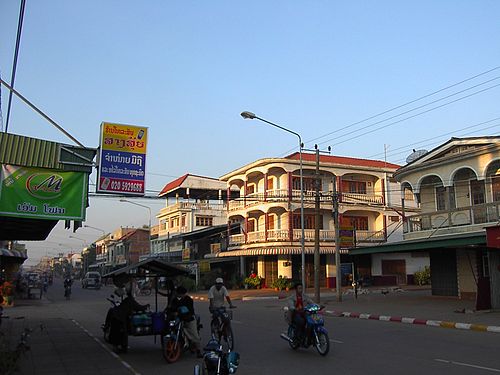
Savannakhet is the capital of Savannakhet Province in Laos, situated in the central part of the country along the Mekong River. As one of the largest cities in Laos, it plays a crucial role in the region's economic and cultural landscape. The city has a rich history influenced by various civilizations, including the Khmer Empire, the French colonial period, and the Lao Kingdom. Savannakhet is known for its well-preserved colonial architecture and historic sites, which reflect the city’s diverse heritage. Notable landmarks include the That Ing Hang Stupa, a significant Buddhist structure that attracts both pilgrims and tourists, and the old town area showcasing French-style buildings, adding a unique charm to the city.
Economically, Savannakhet is strategically positioned as a commercial hub, facilitating trade between Laos, Thailand, and Vietnam. The city's location near the Thailand–Laos Friendship Bridge enhances its role as a transit point, making it significant for regional commerce. Agriculture remains a primary source of livelihood for many residents, with rice, rubber, and other crops being predominant in the surrounding areas. In recent years, efforts to promote tourism have gained momentum, capitalizing on the city’s historical attributes, natural beauty, and cultural festivals. Despite its growth, Savannakhet retains a laid-back atmosphere, making it a unique destination that offers visitors a glimpse into traditional Lao life and a slower pace compared to more urbanized regions. Overall, Savannakhet serves as an important link between the past and the future of Laos, embodying a blend of history, culture, and emerging economic potential.
Facts about Savannakhet
- Savannakhet is the capital of Savannakhet Province, the largest province in Laos by area.
- The city is known for its historical significance as a trading port during the French colonial period, which is reflected in its French colonial architecture.
- Savannakhet is home to the famous That Ing Hang Stupa, a significant Buddhist site that draws pilgrims from all over Laos and neighboring countries.
- Each year, Savannakhet hosts the Savannakhet International Trade Fair, promoting local products and attracting business delegates from various countries.
- The city is uniquely positioned as a transportation hub, connecting Laos to Thailand and Vietnam through road and rail networks.
- Savannakhet has a diverse cultural heritage, with influences from Laos, Thailand, and Vietnamese communities, visible in local cuisine and festivals.
- The city features the ancient Wat Xayaphoum, one of the oldest temples in the region, showcasing traditional Laotian architecture.
- Savannakhet is recognized for its natural beauty, with access to the Mekong River and nearby national parks, offering opportunities for ecotourism.
- The local economy is bolstered by the Savannakhet Special Economic Zone, which attracts foreign investment and industrial development.
- Savannakhet celebrates the annual That Ing Hang Festival, attracting thousands of visitors for a week of religious activities and cultural performances.