Schaffhausen, Switzerland
- 33,863 people
- 12 places to visit
- 47.6959, 8.638
Places to Visit (12)
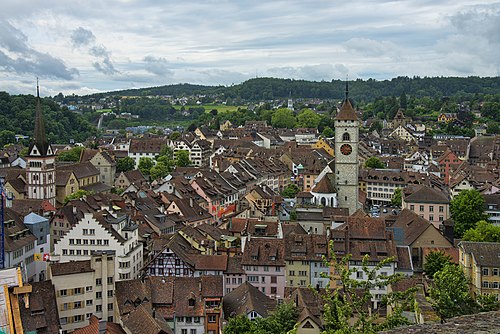
Schaffhausen is a picturesque city located in northern Switzerland, renowned for its historical architecture and vibrant cultural scene. Situated near the borders of Germany, it lies on the banks of the Rhine River, approximately 40 kilometers (25 miles) northeast of Zurich. Schaffhausen is particularly famous for the Rhine Falls, Europe's largest waterfall, which is just a short distance from the city center. The falls are a popular tourist attraction, drawing visitors from around the world to witness the impressive cascades and the stunning surrounding landscape. The city's architecture reflects its rich history, with well-preserved medieval buildings, charming streets, and a number of notable landmarks, including the Munot fortress, which overlooks the city.
Founded in the medieval era, Schaffhausen became an important hub for trade and commerce, particularly during the 15th century, when it became a free imperial city within the Holy Roman Empire. This status contributed to its prosperity, and the wealth generated from trade is evident in the ornate facades of its historic structures, such as the Rathaus (town hall) and the many decorated houses adorned with frescoes. The city's blend of German and Swiss cultural influences is reflected in its cuisine, customs, and dialect. Schaffhausen also plays an important role in the watchmaking industry, being home to several renowned brands and manufacturers.
Today, Schaffhausen's population is approximately 36,000, making it one of the smaller cities in Switzerland, yet it serves as a regional economic center. The city is well-connected through public transport, with a direct train line to Zurich and other Swiss cities, facilitating easy access for travelers. In addition to its historical and natural attractions, Schaffhausen hosts numerous cultural events throughout the year, including festivals and art exhibitions, making it a vibrant place for both residents and visitors alike. Its blend of history, natural beauty, and modern amenities makes Schaffhausen a unique destination in Switzerland, offering a rich experience for those who venture to explore it.
Facts about Schaffhausen
- Schaffhausen is home to the Rhine Falls, the largest waterfall in Europe, which is located just a few kilometers from the city center.
- The Munot Fortress, a distinctive circular fortification built in the 16th century, offers panoramic views of the city and is a symbol of Schaffhausen.
- Schaffhausen is known for its well-preserved medieval town center, featuring beautiful Renaissance buildings and charming cobblestone streets.
- The city has a unique collection of painted oriel windows, which are a distinctive architectural feature not commonly found in other Swiss towns.
- Schaffhausen was historically an important trading hub due to its location along the Rhine River, contributing to its cultural and economic development.
- The city is known for its vibrant cultural scene, hosting events such as the Schaffhausen Music Festival and the quaint Christmas markets.
- Schaffhausen has a strong connection to the Swiss watchmaking industry, housing several renowned watchmakers and contributing to the country's reputation for quality timepieces.
- Famous Swiss artist Hermann Hesse spent part of his youth in Schaffhausen, and the city continues to celebrate its literary heritage.
- The city is part of the Schaffhausen canton, which is the only German-speaking canton that is not bordered by any French-speaking cantons.
- Schaffhausen's location near the German border makes it a notable entry point for visitors traveling between Switzerland and Germany.