Schwäbisch Hall, Germany
- 36,543 people
- 8 places to visit
- 49.1125, 9.7373
Places to Visit (8)
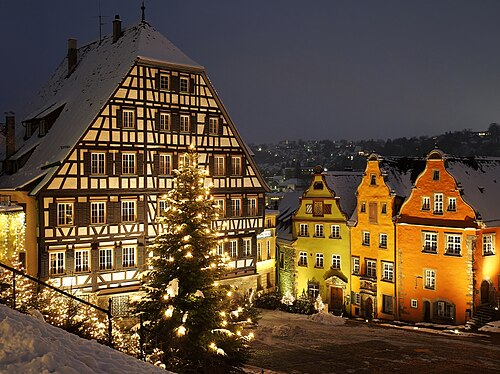
Schwäbisch Hall is a picturesque town located in the southern German state of Baden-Württemberg, nestled in the Hohenlohe region. Renowned for its rich history and cultural heritage, the town boasts a population of approximately 39,000 residents. Its origins date back to the early Middle Ages, with the first documented mention occurring in 1220. Schwäbisch Hall developed into a significant center for salt production, which was crucial during the Middle Ages. The wealth generated from this industry is evident in the town's stunning architecture and well-preserved medieval structures. Notably, the market square, with its iconic timber-framed houses, draws visitors and serves as a central hub for various cultural and community activities.
The town is also known for its vibrant arts scene and numerous festivals. The Schwäbisch Hall Open-Air Theatre, established in 1925, is one of the most significant attractions, providing a unique venue for theatrical performances in a stunning outdoor setting. The historical St. Michael's Church, with its impressive Gothic architecture, stands as a testament to the town's architectural significance. Schwäbisch Hall's commitment to preservation is reflected in its museums and local exhibitions, showcasing the region's history, art, and culture. Additionally, the surrounding countryside offers natural beauty and outdoor activities, making it a perfect destination for tourists and nature enthusiasts alike. The combination of historical significance, cultural richness, and scenic landscapes contributes to Schwäbisch Hall's charm as a quintessential German town, appealing to visitors from around the world.
Facts about Schwäbisch Hall
- Schwäbisch Hall is known for its well-preserved medieval architecture, including the stunning St. Michael's Church with its iconic wooden altar.
- The city has a rich history in the salt trade, which dates back to the 12th century, and features the historic Saltworks, a UNESCO World Heritage site.
- Schwäbisch Hall is home to the famous Schwäbisch Hall Theater, which is one of the oldest open-air theaters in Germany, dating back to 1920.
- The town hosts the annual 'Schwäbisch Hall Hohenneuffen Festival,' celebrating local traditions and music, making it a unique cultural event in the region.
- Schwäbisch Hall is situated on the Kocher River, providing picturesque views and a beautiful natural setting for outdoor activities.
- The city is known for its annual 'Schwäbisch Hall Market,' which showcases local artisans and crafts, highlighting regional culture and gastronomy.
- Schwäbisch Hall is recognized for its innovative city planning, integrating modern urban development with historical heritage.
- The city features a popular outdoor swimming pool known as the 'Wonnemar,' which is renowned for its spa facilities and wellness offerings.
- Schwäbisch Hall is often referred to as the 'City of Art' due to its vibrant arts scene, with numerous galleries and workshops for local artists.
- The historic town square, Marktplatz, is a focal point for community gatherings and hosts various events throughout the year, setting it apart from many other cities in Germany.