Schwerin, Germany
- 96,641 people
- 9 places to visit
- 53.6355, 11.4012
Places to Visit (9)
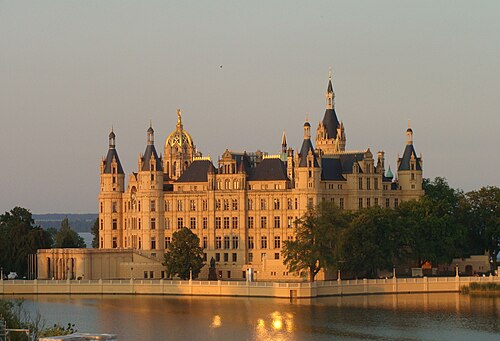
Schwerin, the capital of the state of Mecklenburg-Vorpommern in northern Germany, is known for its rich history, picturesque lakes, and stunning architecture. The city is situated on the banks of Lake Schwerin, the fourth-largest lake in Germany, and is characterized by its scenic beauty, which includes a landscape dotted with parks and gardens. Founded in the early medieval period, Schwerin became a significant center of governance and culture in the region. The city's architectural highlight is the Schwerin Palace, a remarkable example of Romantic Historicism, which houses the state parliament and is surrounded by gardens and a lake. This stunning castle, with its fairytale-like towers, draws visitors from around the world and is a quintessential symbol of the city.
Beyond the palace, Schwerin boasts several museums, including the State Museum of Schwerin, which showcases art and cultural history from the region. The city's Old Town features beautifully restored buildings, cobblestone streets, and historical landmarks such as the St. Mary's Church, known for its neo-Gothic architecture. Schwerin also offers vibrant cultural events throughout the year, including the Schweriner Festspiele, a prominent music festival, and the annual Schwerin Christmas Market, which highlights regional crafts and culinary delights. The city's strategic location between Berlin and Hamburg makes it a convenient spot for tourists seeking to explore northern Germany, while its tranquil lakes and parks provide ample opportunities for outdoor activities and relaxation. With a population of approximately 95,000, Schwerin balances urban life with the charm of a small city, making it a hidden gem in the heart of Germany.
Facts about Schwerin
- Schwerin is the capital of the federal state of Mecklenburg-Vorpommern and is known for its picturesque lakes and parks, especially the Lake Schwerin.
- The Schwerin Castle (Schweriner Schloss), located on an island in the lake, is one of the most iconic landmarks in Germany and serves as the seat of the state parliament (Landtag).
- Schwerin boasts a rich history dating back to the Slavic settlement in the 7th century and is noted for its well-preserved medieval architecture.
- The city is home to the State Museum of Schwerin, which holds significant collections of art and historical artifacts, including works by German Romantic painters.
- Schwerin hosts the annual Schwerin Castle Festival (Schweriner Schlossfest), which celebrates its historical and cultural heritage with events, concerts, and performances.
- The city is famous for its picturesque gardens and parks, including the Public Garden (Öffentlicher Garten), which showcases beautiful landscaping and sculptures.
- Schwerin's Old Town features a unique blend of architectural styles, including Gothic, Renaissance, and Baroque, making it a cultural gem.
- Schwerin is known for its vibrant cultural scene, including the Mecklenburg State Theatre, which is one of the oldest and most distinguished theaters in Germany.
- The city's economy is bolstered by its focus on education and research, housing the University of Applied Sciences and several research institutions.
- Schwerin is uniquely situated among numerous lakes, earning it the nickname 'City of Seven Lakes', which distinguishes it from many other German cities.