Schwerte, Germany
- 50,399 people
- 12 places to visit
- 51.4289, 7.5656
Places to Visit (12)
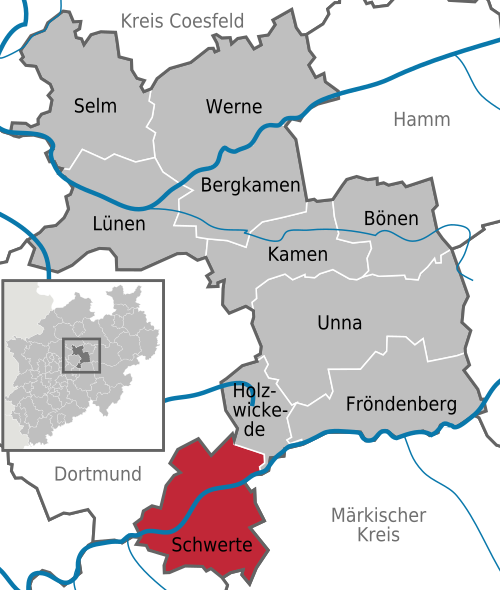
Schwerte is a small city located in North Rhine-Westphalia, Germany, situated approximately 15 kilometers southeast of Dortmund. It lies in the eastern part of the Ruhr area, one of the most populous urban regions in Europe. With a population of around 50,000 residents, Schwerte is characterized by its blend of historical architecture and modern amenities. The city is traversed by the river Ruhr, which has played a crucial role in its development and continued growth. Schwerte is known for its picturesque landscapes and natural surroundings, making it an attractive place for outdoor activities and leisure.
Historically, Schwerte's origins can be traced back to the medieval period, and it was granted town status in 1373. The city has a rich industrial heritage, particularly in the field of iron and steel production, which flourished during the 19th and early 20th centuries. Although heavy industry has diminished in recent decades, Schwerte has successfully transitioned to a more diversified economy, incorporating service-oriented businesses and retail. Additionally, Schwerte hosts several cultural and educational institutions, including schools, libraries, and art galleries, contributing to the vibrant community life.
The city's infrastructure includes well-developed public transport networks, making it easily accessible from larger cities in the region. Several parks and recreational areas provide residents and visitors with opportunities for relaxation and outdoor activities. Schwerte is also known for its annual events and festivals that celebrate local traditions and foster community spirit. With its historical significance, natural beauty, and modern conveniences, Schwerte presents a unique blend of urban living and small-town charm, making it a desirable place to live and visit.
Facts about Schwerte
- Schwerte is known as the 'Gateway to the Sauerland' due to its geographic location and quick access to the Sauerland mountains, making it popular for outdoor activities.
- The city has a rich history dating back to the 9th century, evidenced by the remains of the historic St. Viktor Church, one of the oldest buildings in the region.
- Schwerte is famous for its annual event, the Schwerte Christmas Market, which is known for its charming atmosphere and local artisan crafts.
- The local landmark, the 'Kunst-Station' (Art Station), is a cultural center that promotes contemporary art and hosts various exhibitions throughout the year.
- Schwerte has a unique railway history, featuring one of the oldest railway stations in North Rhine-Westphalia, which has been restored and is still in use today.
- The city is surrounded by beautiful landscapes, including the Ruhr River, which offers recreational opportunities like cycling and walking trails along its banks.
- Schwerte has a distinct tradition of the 'Schwerte Carnival', celebrated annually with a colorful parade, making it a significant local cultural event.
- The city hosts the 'Schwerte City Festival' each summer, which features music, food, and various activities that highlight local culture and community spirit.
- Schwerte is home to the unique 'Pott's Brauhaus', showcasing locally brewed beers and traditional German cuisine, contributing to the city's reputation for gastronomy.
- The city is part of the Ruhr area, which is known for its industrial heritage, but Schwerte has successfully maintained a balance between modern development and preservation of its historical sites.