Segovia, Spain
- 56,660 people
- 14 places to visit
- 40.9429, -4.1088
Places to Visit (14)
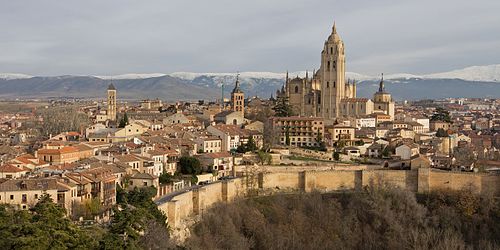
Segovia is a historic city located in the autonomous community of Castile and León, Spain. It is situated approximately 90 kilometers northwest of Madrid, making it an attractive destination for visitors seeking to explore its rich cultural heritage and stunning architecture. The city's history dates back to Roman times, when it was known as Segovia, and it features numerous well-preserved monuments from various periods, including the Roman aqueduct, which remains one of Segovia's most iconic landmarks. Built in the late 1st or early 2nd century AD, the aqueduct is an impressive feat of engineering, consisting of 166 arches and stretching over 800 meters long, showcasing the ingenuity of Roman construction.
In addition to its aqueduct, Segovia boasts a well-preserved medieval old town that has been designated a UNESCO World Heritage Site. The Alcázar of Segovia, a stunning castle with its distinct fairy-tale-like turrets, stands at the confluence of the Eresma and Clamores rivers, and has served various roles throughout its history, including as a royal palace and military fortress. The city's cathedral, known as La Catedral de Santa María, exemplifies Gothic architecture and is notable for its soaring towers and intricately designed interior. Segovia's rich religious heritage can also be seen in its numerous churches and synagogues, reflecting a tapestry of influences from different periods and cultures.
Segovia is not only a feast for the eyes but also for the palate. The city is famous for its culinary specialties, particularly cochinillo, a dish featuring roasted suckling pig that is a staple at local celebrations. The gastronomy of Segovia, combined with its historical significance and architectural beauty, attracts tourists from around the globe, making it a vibrant center of culture and history in Spain. Visitors often enjoy leisurely strolls through its charming streets, admiring the blend of Roman, Gothic, and Renaissance influences that characterize the city. Overall, Segovia represents a captivating snapshot of Spain's past, offering a rich experience for history enthusiasts, food lovers, and travelers alike.
Facts about Segovia
- Segovia is home to one of the best-preserved Roman aqueducts in the world, a UNESCO World Heritage Site that dates back to the 1st century AD.
- The Alcázar of Segovia, resembling a fairytale castle, has served both as a royal palace and a fortress, and is known for its distinctive shape resembling the bow of a ship.
- Segovia is famous for its cochinillo asado, or roasted suckling pig, which is a traditional dish expertly prepared and served to visitors from all over.
- The city features an impressive Gothic cathedral, Catedral de Nuestra Señora de la Asunción de Segovia, which is one of the last Gothic cathedrals built in Spain.
- Segovia's old town and aqueduct were declared a UNESCO World Heritage Site in 1985, recognizing the city's historical and architectural significance.
- The city played a crucial role in Spanish history, serving as the birthplace of Queen Isabella I of Castile, who sponsored Christopher Columbus's voyage to the New World.
- Segovia's location at the foothills of the Sierra de Guadarrama provides stunning views and opportunities for outdoor activities, distinguishing it from many other Spanish cities.
- It is known for the annual 'Festival de la Luz' which celebrates light and art, bringing together local and international artists in a unique display.
- Segovia is one of the few cities in Spain that maintains a significant Historic Preservation status, ensuring the conservation of its medieval architecture and urban landscape.
- The city has a rich tradition of textiles, especially wool, which dates back to the medieval period, making it historically significant in the textile industry.