Senigallia, Italy
- 30,882 people
- 16 places to visit
- 43.7198, 13.2152
Places to Visit (16)
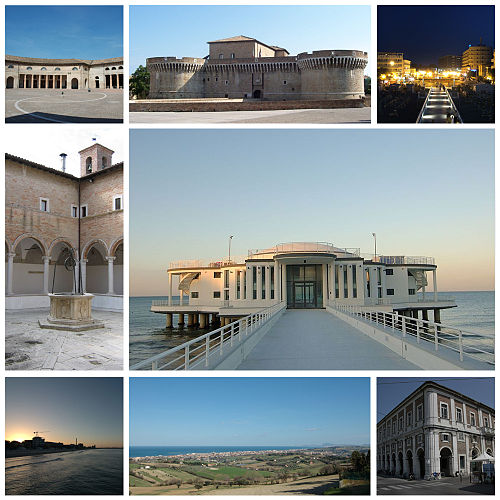
Senigallia is a charming coastal city located in the Marche region of Italy, known for its rich history, beautiful beaches, and vibrant cultural scene. Situated on the Adriatic Sea, Senigallia has been an important port since Roman times, originally established as a settlement called Sena Gallica. The city's strategic position made it a crucial point for trade and defense, leading to the construction of impressive fortifications, including the 16th-century Rocca Roveresca, a castle that symbolizes its historical significance. The architecture of Senigallia reflects various artistic styles, with notable structures like the Cathedral of St. Peter and the Church of the Cross, showcasing centuries of cultural development.
In addition to its historical heritage, Senigallia is famous for its beautiful sandy beaches and a lively seafront promenade. The city hosts numerous annual events and festivals that draw visitors from across Italy and beyond. One of the most famous is the Summer Jamboree, a festival celebrating the music and culture of the 1940s and 1950s with live performances, dance competitions, and vintage markets. Culinary enthusiasts can indulge in local delicacies featuring seafood and regional specialties, such as "brodetto," a traditional fish stew. The city’s picturesque setting, dynamic atmosphere, and blend of history and modernity make Senigallia a compelling destination for tourists seeking both relaxation and cultural enrichment.
Facts about Senigallia
- Senigallia is known for its historic 'Rocca Roveresca', a 15th-century fortress that dominates the city skyline and reflects its rich feudal history.
- The city is famous for the 'Velvet Beach', a picturesque sandy coastline that attracts tourists and locals, making it one of the most popular seaside destinations in the Marche region.
- Senigallia hosts the annual 'Summer Jamboree', an international festival celebrating 1940s and 1950s American music and culture, drawing enthusiasts from around the world.
- The town was an important strategic port in the Roman Empire, serving as a key maritime trade route and known as 'Senigallia' in ancient times.
- Senigallia is home to the 'Piazza del Duca', a vibrant square surrounded by historic buildings and lively cafes, often considered the heart of the city's social life.
- The city is famous for its 'Crostini con l’Anitra', a traditional dish made with duck, showcasing the culinary traditions unique to this area of Italy.
- Senigallia's 'Museum of the History of the Adriatic' offers an in-depth look at maritime history and the role of the Adriatic Sea in shaping local culture.
- The city has a distinct Maritime District, characterized by its charming canals and stunning waterfront views that differentiate it from many inland cities in Italy.
- Senigallia was historically a hub for silk trade in the Middle Ages, a fact that is celebrated in various local festivals and is part of its cultural heritage.
- The city is well-regarded for its high-quality local wines, especially the 'Verdicchio', a white wine that is recognized internationally and contributes to the region's agricultural distinction.