Seosan, South Korea
- 74,208 people
- 2 places to visit
- 36.7845, 126.4503
Places to Visit (2)
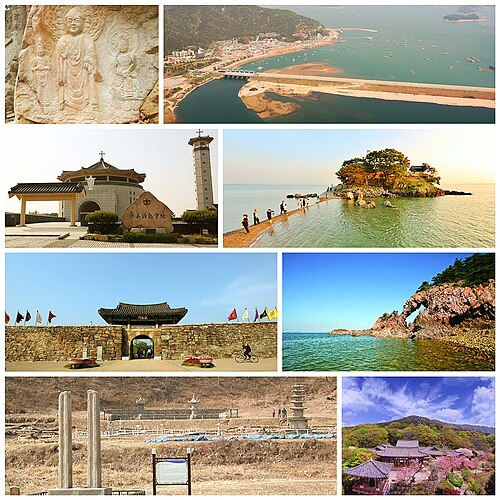
Seosan is a city located in the South Chungcheong Province of South Korea, known for its rich historical heritage and natural beauty. Established as a city in 1995, Seosan has a population of around 170,000 residents and spans an area of approximately 930 square kilometers. The city's strategic position makes it a significant transportation hub, connecting various regions through extensive road networks. Its economy is primarily based on agriculture, with rice, vegetables, and fruits as key products due to the region's fertile land. Seosan is also home to many small and medium-sized enterprises, contributing to its economic diversity.
Culturally, Seosan boasts numerous historical sites and landmarks that reflect its long history dating back to ancient times. The city is known for the Seosan Historic Site, which includes remains from various periods, showcasing its importance during the Baekje Kingdom. One of its most famous attractions is the Yi Dong-gyeong Memorial Hall, commemorating the influential scholar and public servant who played a crucial role in the region's development. Additionally, Seosan features beautiful natural landscapes, including the Baekbongsan Mountain and the scenic shores of the West Sea, attracting visitors year-round. The annual Seosan Charcoal Festival highlights the local tradition of charcoal production and enhances community engagement through various activities, live performances, and culinary experiences. Overall, Seosan represents a unique blend of history, culture, and natural beauty, making it an important part of South Korea's regional identity.
Facts about Seosan
- Seosan is home to the Daejeong Cemetery, which is the resting place of many prominent figures from the Korean War, making it a significant site for historical remembrance.
- The city is known for its picturesque coastal landscapes and is located near the Western Sea, providing beautiful sunsets and unique marine experiences.
- Seosan is famous for the Seosan Hanbang Sujigui, a traditional Korean herbal medicine spa that attracts visitors seeking natural wellness.
- The city is recognized for its agricultural contributions, especially in the production of high-quality rice due to its fertile soil and favorable climate.
- Seosan hosts the annual Seosan Sweet Potato Festival, celebrating the region's most popular crop, which draws locals and tourists alike.
- Seosan has a rich historical background, being the site of various ancient tombs and Buddhist relics that date back to the Silla Dynasty, showcasing its long-standing cultural heritage.
- The city is distinguished by its unique food specialty, Seosan-style bibimbap, which includes locally sourced vegetables and grains, differentiating it from other regional variations.
- Seosan is home to the Seosan National Period Park, which is dedicated to preserving the historical sites from the Korean ancient period, featuring well-maintained trails and educational exhibits.
- Notably, Seosan is where the famous Seosan Bareun Fruit Cooperative originated, promoting organic farming and sustainability practices in agriculture.
- The city is closely associated with the Seosan Electric Power Plant, which plays a crucial role in South Korea's energy supply, highlighting the city's industrial significance.