Shahrisabz, Uzbekistan
- 142,700 people
- 5 places to visit
- 39.0538, 66.8201
Places to Visit (5)
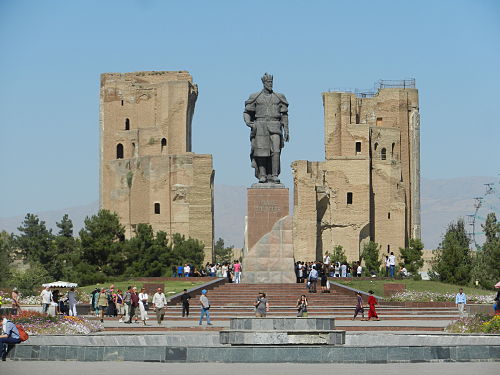
Shahrisabz is a historic city located in the Qashqadaryo Region of Uzbekistan, approximately 80 kilometers south of Samarkand. Known in ancient times as Kesh, it is renowned for its rich heritage and historical significance, particularly as the birthplace of the famous conqueror Timur (Tamerlane) in the 14th century. Shahrisabz served as a vital cultural and trade center along the Silk Road, connecting the East and West, and showcasing a blend of various architectural styles influenced by Persian, Turkic, and Central Asian traditions.
The city is home to several significant architectural landmarks, many of which reflect the grandeur of its past. Among these is the Ak-Saray Palace, which was once the grand residence of Timur and is admired for its imposing structure and intricate decorations. While much of the palace is in ruins, its remnants still convey the scale and magnificence of the original design. The Dorut Tilovat Complex, which includes the tomb of Timur's spiritual guide and the Kok Gumbaz Mosque, exemplifies the Islamic architectural features of the time with its stunning blue domes and elaborate tile work. Another notable site is the Shah-i-Zinda necropolis, a UNESCO World Heritage Site, featuring a stunning array of mausoleums adorned with intricate mosaics and carvings.
Today, Shahrisabz is not only a testament to Uzbekistan's historical and cultural development but also a focal point for tourism. Visitors are drawn to its unique blend of history, architecture, and natural beauty, as it lies at the foothills of the Pamir Mountains. The city offers insights into the rich history of the region, making it an essential stop for those exploring Uzbekistan. Despite modernization and the passage of time, Shahrisabz continues to celebrate its ancient legacy while showcasing its vibrant local culture, contributing to its reputation as a key heritage site in Central Asia.
Facts about Shahrisabz
- Shahrisabz is known as the birthplace of the famous Uzbek conqueror Timur (Tamerlane), who founded the Timurid Empire in the 14th century.
- The city boasts the UNESCO World Heritage Site, the 'Historical Complex of Shahriyar', which includes significant structures such as the Ak-Saray Palace and the Dorut Tilovat necropolis.
- Shahrisabz is famous for its rich tradition of craftsmanship, especially in carpet making and silk production, reflecting its historical status as a key trade hub on the Silk Road.
- The monumental portal of the Ak-Saray Palace is one of the tallest in Central Asia, showcasing the grandeur of Timurid architecture and design.
- The city is home to the Dorus Saodat complex, which served as a family burial place for the Timurids, featuring ornate mausoleums and intricately designed tombs.
- Unlike many other cities in Uzbekistan, Shahrisabz retains a rural charm with stunning landscapes and a more relaxed atmosphere, appealing to those looking to escape urban life.
- Shahrisabz hosts the annual Silk and Spices Festival, celebrating its historical ties to the Silk Road and showcasing local culture, crafts, and cuisine.
- The city's population has a unique blend of Uzbek, Tajik, and other ethnic communities, contributing to its diverse cultural landscape.
- Shahrisabz's historic significance is acknowledged as part of the cultural heritage of Uzbekistan, with numerous conservation efforts focused on its ancient structures.
- The city maintains its traditional clay architecture, which is distinct from the Soviet-era buildings prevalent in other urban areas of Uzbekistan.