Shinyanga, Tanzania
- 139,727 people
- 2 places to visit
- -3.681, 33.4271
Places to Visit (2)
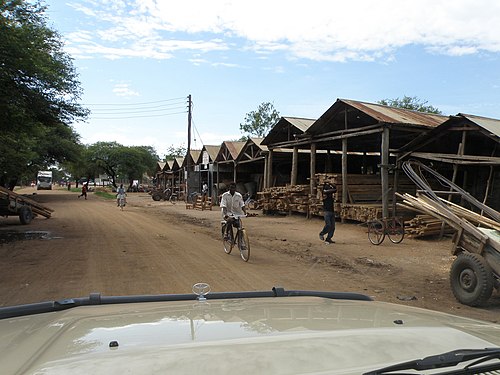
Shinyanga is a city located in the northwestern part of Tanzania, serving as the administrative capital of the Shinyanga Region. Situated on the banks of the Lake Victoria, it plays a crucial role in connecting various transport routes due to its strategic location. The city is approximately 350 kilometers from Dar es Salaam, the capital city of Tanzania, and about 200 kilometers from Mwanza, the major city located on the shores of Lake Victoria. According to estimates, Shinyanga has a population of over 200,000 residents, with a predominantly young demographic. The urban population is a melting pot of various ethnic groups, including the Sukuma people, who are the largest ethnic group in the region.
Economically, Shinyanga is known for its agriculture, with the surrounding region being fertile and suitable for growing various crops, including maize, millet, and cassava. Additionally, the city plays a significant role in the mining industry, particularly in gold mining, as several gold mines operate in the vicinity. The mining sector has attracted both local and foreign investments, contributing to the city's economic development. Despite its economic potential, Shinyanga faces challenges such as inadequate infrastructure and limited access to basic services like clean water and healthcare. Six important institutions are located within the city, including Shinyanga Regional Hospital and several primary and secondary schools, which aim to improve the overall quality of life for its residents. Cultural activities are also prominent, with traditional events and festivals celebrating the Sukuma heritage, adding to the rich tapestry of local culture. As Tanzania continues to develop, Shinyanga is poised for growth, leveraging its natural resources and geographical advantages to enhance its economic position.
Facts about Shinyanga
- Shinyanga is known for its rich mining activities, particularly in gold, which has contributed significantly to the local economy and attracts investors.
- The city is home to the historic Ng'wang'walu archaeological site, where ancient pottery and tools have been discovered, showcasing the region's prehistoric significance.
- Shinyanga serves as an important agricultural hub, particularly famous for its production of sunflowers and other crops, which leads to vibrant local markets.
- The region is culturally diverse, hosting various ethnic communities including the Sukuma and Nyamwezi, which contribute to its rich traditions and festivals.
- Shinyanga has a notable performing arts scene, particularly through the Sukuma Cultural Troupe, which showcases traditional dance and music.
- The annual 'Sukuma Festival' celebrates the customs and traditions of the Sukuma people, featuring art, music, and dance performances, making it a focal point for cultural expression.
- Shinyanga is strategically located at the junction of major roads leading to the Lake Victoria region, facilitating trade and transportation across northern Tanzania.
- The city is home to the Shinyanga Regional Hospital, one of the significant healthcare facilities in Tanzania, providing medical services to a wide area.
- Shinyanga's proximity to the historical city of Tabora enhances its cultural and economic landscape, as both cities share historical trade routes and cultural exchanges.
- The Shinyanga region is known for its unique baobab trees, which are not only significant to the local ecosystem but also feature prominently in local folklore and traditions.