Siegen, Germany
- 107,242 people
- 17 places to visit
- 50.8838, 8.021
Places to Visit (17)
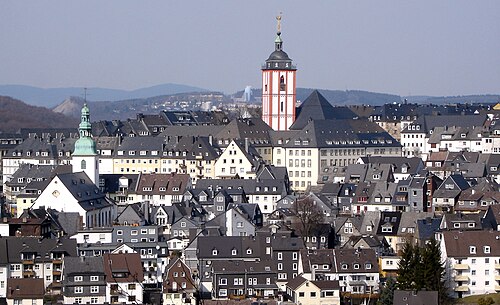
Siegen is a city situated in the North Rhine-Westphalia region of Germany, known for its rich history and scenic landscape. Located at the confluence of the rivers Sieg and Westerbach, Siegen lies in the hilly terrain of the Siegerland, approximately 100 kilometers east of Cologne. With a population of around 100,000 inhabitants, it ranks as one of the larger cities in the area. The city is steeped in history, tracing its origins back to the early Middle Ages when it developed around a fortress established by the Counts of Nassau. Notably, Siegen was also a significant site during the industrial revolution, particularly for coal and steel production, which played a crucial role in its economic development throughout the 19th and early 20th centuries.
The town is distinguished by its historical architecture, including the impressive Upper Castle (Obere Schloss), a medieval structure that now houses a museum showcasing the city's history, art, and culture. Siegen is also notable for its Baroque-style Lower Castle, which embodies the local nobility's artistic expressions from the 17th century. The city’s economy today is diversified, with a mix of traditional industries and modern technology firms, along with a growing academic presence, headlined by the University of Siegen, which contributes to the city's vibrant intellectual and cultural life. Nature enthusiasts will find ample opportunities for outdoor activities in the surrounding Siegerland region, including hiking and cycling paths that weave through lush forests and picturesque valleys.
Culturally, Siegen offers a variety of events and attractions that reflect its artistic heritage. The city hosts several yearly festivals, art exhibitions, and performances, enhancing its social vibrancy. The cultural scene is further enriched by various theaters, galleries, and cinema venues. The city maintains a strong sense of community, with numerous local associations and clubs. Siegen’s blend of historical significance, educational opportunities, and natural beauty makes it a unique destination in Germany, drawing visitors who appreciate both its past and the modern developments that shape its present.
Facts about Siegen
- Siegen is known for its rich mining history, particularly for coal and iron, which played a significant role in its industrial development.
- The city is home to the Universität Siegen, known for its innovative research and a diverse student body, which enhances its educational landscape.
- Siegen's historic Upper Castle (Oberes Schloss) dates back to the 13th century and contains a museum showcasing local history and art.
- The city has a unique geographical feature called the 'Siegtal,' characterized by its picturesque valley and extensive hiking trails.
- Siegen is one of the few cities in Germany that features a significant number of half-timbered houses, reflecting traditional German architecture.
- In Siegen, the famous painter and graphic artist Paul Wiedemann was born, contributing to its cultural heritage.
- The city hosts the annual 'Weihnachtsmarkt' (Christmas Market), which attracts visitors with its festive atmosphere and local crafts.
- Siegen is often referred to as the 'City of Trees' due to its abundant green spaces and commitment to urban forestry.
- The city is known for its unique 'Church of St. Michael,' which features a striking modern design, completed in 1979, contrasting with traditional church architecture in Germany.
- Siegen has a vibrant cultural calendar, including events like the 'Culture Night' that celebrates local artists and musicians across various venues.