Sieradz, Poland
- 44,436 people
- 10 places to visit
- 51.5956, 18.7303
Places to Visit (10)
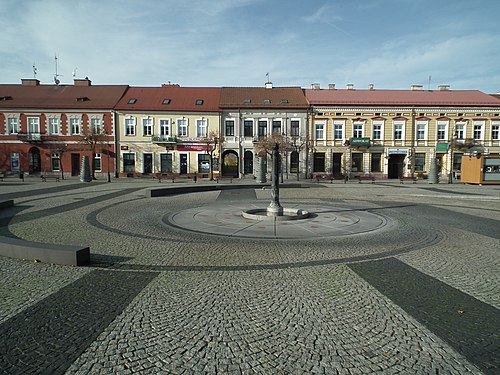
Sieradz is a historic city located in central Poland, within the Łódź Voivodeship. It lies approximately 140 kilometers west of Warsaw and 50 kilometers south of Łódź, the region's capital. Established as early as the 10th century, Sieradz has played a significant role in Polish history. The city was a center of trade and governance in the Middle Ages and served as a royal town. Its strategic location near important trade routes contributed to its growth and development over the centuries. The city was the capital of the Sieradz Voivodeship until the administrative changes in 1793.
The architectural landscape of Sieradz reflects its rich heritage, featuring a mix of Gothic, Renaissance, and Baroque styles. One of the city’s prominent landmarks is the Church of St. Catherine, which exhibits elements of Gothic architecture. Another significant site is the remains of the royal castle, which once served as a residence for Polish monarchs and symbolized the city's historical importance. In addition, Sieradz hosts several museums, including the Museum of the Sieradz Land, which showcases the region's history and culture. Surrounded by scenic landscapes, including parks and rivers, Sieradz offers a blend of natural beauty and urban charm, making it an attractive place for visitors and residents alike.
Economically, Sieradz has diversified over the years, moving from a primarily agricultural base to a more mixed economy that includes manufacturing and services. The city has witnessed reconstruction and modernization, especially after World War II, leading to the establishment of new industrial zones and infrastructure improvements. Today, Sieradz continues to honor its past while adapting to contemporary developments, and it serves as a vital point of connection within the Łódź region. With its rich history, cultural significance, and ongoing modernization efforts, Sieradz remains an important city in Poland's historical and economic landscape.
Facts about Sieradz
- Sieradz is one of the oldest towns in Poland, with a history dating back over 1,000 years.
- The city was granted municipal rights in 1230, making it one of the first towns in the region to receive such status.
- Sieradz is known for its well-preserved medieval architecture, including the 13th-century Church of St. Paul and St. Peter.
- The city has a unique triangular layout, a characteristic that sets it apart from many other Polish towns.
- Sieradz debuted in the 19th century as an important center for the textile industry, earning it a reputation for quality fabric production.
- It is home to the Sieradz Land Museum, which showcases the region's history and culture, including exhibits on local crafts and art.
- Sieradz has a vibrant tradition of folklore and is known for hosting annual events that celebrate regional crafts and culinary specialties.
- The city played a significant role in the early Polish state and was once the site of royal courts and assemblies.
- Sieradz is located at the confluence of the Warta and Grabia rivers, providing scenic views and opportunities for outdoor recreation.
- A notable local event is the Sieradz Carnival, which draws visitors from across the region and highlights the city's cultural heritage.