Sikasso, Mali
- 349,324 people
- 3 places to visit
- 11.3224, -5.6984
Places to Visit (3)
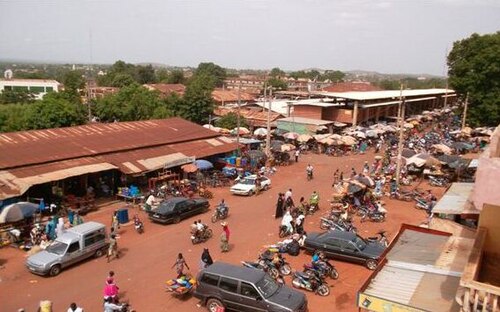
Sikasso is the second-largest city in Mali and serves as the capital of the Sikasso Region in the southern part of the country. Positioned about 360 kilometers southeast of Mali's capital, Bamako, Sikasso is strategically located near the borders of Ghana and Côte d'Ivoire, making it an important hub for trade and commerce in West Africa. The city lies at an elevation of approximately 400 meters above sea level and experiences a tropical savanna climate, characterized by a pronounced wet season from June to September, with dry seasons for the remainder of the year.
Historically, Sikasso has played a significant role in the region as a center of trade, agriculture, and cultural exchange. The city is known for its rich agricultural activities, primarily focused on the cultivation of crops such as cotton, millet, and maize, which are vital to the local economy. Moreover, Sikasso is a melting pot of ethnic groups, predominantly the Bobo, Senoufo, and Malinke, each contributing to the city's diverse cultural landscape. In terms of infrastructure, Sikasso is equipped with a network of roads that facilitate transportation and trade with neighboring countries. The town's vibrant markets are a testament to its bustling economic activity, where traders sell a variety of goods, including textiles, handicrafts, and agricultural products.
In addition to its economic significance, Sikasso is also known for its historical and cultural heritage. The city features traditional architecture, including mud-brick homes and structures that reflect the region's architectural influences. The annual Sikasso Festival, celebrating local culture and traditions, attracts visitors and promotes regional unity. Although Sikasso faces challenges such as poverty and limited access to education and healthcare, ongoing developmental efforts aim to enhance the quality of life for its residents. Overall, Sikasso stands as a significant city within Mali, contributing to the nation’s culture, economy, and ongoing development.
Facts about Sikasso
- Sikasso is known as the 'City of the Three Rivers' due to its proximity to the Bagoé, Kignan, and Sikasso rivers, which distinguishes it from other cities in Mali.
- The city has a rich history as a center of agriculture, specifically known for its production of cotton, which has earned it the nickname 'Cotton Capital of Mali'.
- Sikasso is home to the famous Kibaru Market, one of the largest in the region, which showcases diverse local crafts, food, and agricultural products.
- The architecture of Sikasso is notable for its unique traditional mudbrick buildings, including the impressive Sikasso Fortress, which reflects the historical importance of the city during the 19th century.
- In the late 19th century, Sikasso became a major strategic point during the expansion of the French colonial influence, setting it apart from other cities that were less involved in these historical conflicts.
- The city hosts the annual Sikasso Festival, a vibrant celebration of local culture, music, and arts that attracts visitors and promotes tourism in the region.
- Sikasso's traditional dance forms and music, particularly the 'Kita' dance, are unique to the area and play a significant role in the cultural identity of its people.
- The city is positioned in a fertile area and is a hub for trade routes connecting Mali to neighboring countries such as Ivory Coast and Burkina Faso.
- Sikasso has a significant historical site, the Bolibana site, which features ancient carvings and is considered an important archaeological find in Mali.
- The local population is a melting pot of various ethnic groups, including the Dioula, Senoufo, and Bobo peoples, contributing to Sikasso's diverse cultural landscape.