Sivas, Turkey
- 264,022 people
- 9 places to visit
- 39.7505, 37.015
Places to Visit (9)
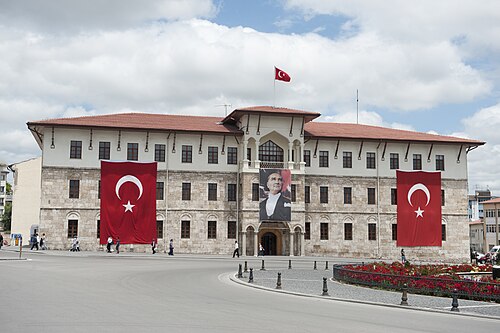
Sivas is a city located in central Turkey, serving as the capital of Sivas Province. Situated in the Eastern Anatolia region, Sivas is known for its rich history, cultural heritage, and strategic geographical position. The city is set at an elevation of approximately 1,280 meters (4,200 feet) and is surrounded by the Kızılırmak River, the longest river in Turkey. It enjoys a continental climate characterized by hot summers and cold winters. The population of Sivas, as of the latest census, hovers around 300,000 residents, making it one of the larger cities in the region.
Founded in antiquity, Sivas has been a significant settlement since the Hittite period, and it has been known by various names throughout history, including Sebastia in Roman times. The city's historical significance is underscored by its numerous ancient monuments, including remarkable Seljuk and Ottoman-era structures. Among these, the Great Mosque of Sivas (Ulu Cami), built in 1196, stands out with its intricate stone carvings and unique architecture. Additionally, the city is home to the Sivas Castle, which dates back to the Byzantine era, and the Rüstem Pasha Caravanserai, reflecting the region's importance as a trade route during the Silk Road era.
Sivas is not only a historical hub but also an educational and cultural center in Turkey. It houses several universities, including Cumhuriyet University, attracting a diverse student population. The city also celebrates its cultural heritage through various festivals and events, showcasing traditional music, dance, and cuisine. Known for its kebabs, especially the Sivas Kebab and catmer (a local pastry), Sivas offers a delectable glimpse into Turkish culinary traditions. Economically, the city benefits from agricultural activities, textile production, and mineral resources, contributing to its local economy. Overall, Sivas is a vibrant city that melds history, culture, and modernity, making it a notable destination for both locals and tourists.
Facts about Sivas
- Sivas is known for its rich historical heritage, with numerous Seljuk and Ottoman era monuments, including the Grand Mosque (Ulu Camii) built in 1196, showcasing impressive architecture.
- The city is famous for its unique 'Sivas Kangal' dog, recognized for its strength and protective nature, making it a significant breed in Turkey and worldwide.
- Sivas played a crucial role in the National Turkish Movement during the early 20th century, hosting the Sivas Congress in 1919, which was pivotal in the establishment of modern Turkey.
- Sivas is home to the Divriği Great Mosque and Darüşşifa, a UNESCO World Heritage Site, known for its intricate stone carvings and remarkable architectural design.
- The city has a significant presence of thermal springs, particularly near the town of Kangal, which is popular for its therapeutic waters and fish that nibble on the skin for health benefits.
- Sivas is renowned for its local cuisine, particularly the 'Sivas Kebab' and 'Mumbar' (stuffed intestines), which showcase the unique flavors of the region.
- The city hosts an annual 'Sivas International Puppet Festival,' celebrating traditional puppet making and performances, distinguishing it as a cultural hub for the art form.
- Sivas has an important educational reputation, being home to Sivas Cumhuriyet University, founded in 1974, which contributes to the city's vibrant student population.
- The region's history dates back to ancient times, with ruins from the Hittite and Roman civilizations, making Sivas a significant archaeological area in Turkey.
- Sivas is located at a high elevation, often referred to as the 'City of Stone,' due to its rugged landscape and the prevalence of stone in local architecture.