Skopje, North Macedonia
- 474,889 people
- 17 places to visit
- 41.9981, 21.4254
Places to Visit (17)
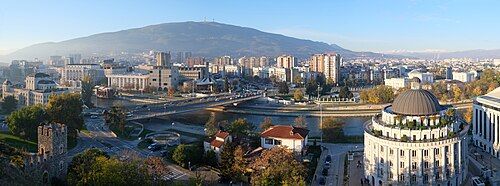
Skopje, the capital and largest city of North Macedonia, is situated in the central part of the country, along the banks of the Vardar River. Historically significant, Skopje has been inhabited since at least the 3rd century BC and has seen the influence of various civilizations, including the Romans, Byzantines, and Ottomans. The city’s multicultural heritage is evident in its architecture, which includes a mix of neoclassical structures and Ottoman-era buildings, such as the Old Bazaar and the Stone Bridge, a symbol of Skopje that connects the modern and historical parts of the city.
In recent years, Skopje has undergone significant urban development, highlighted by the government-led project known as "Skopje 2014." This initiative aimed to revitalize the city’s urban landscape by adding numerous statues, new buildings, and cultural monuments, often reflecting a classical style that some critics argue overshadows the city’s historical architecture. Despite this, the city retains its vibrant atmosphere, characterized by lively squares, bustling markets, and a diverse culinary scene. Cultural institutions, including the National Museum of the Republic of North Macedonia and the Museum of the Macedonian Struggle, contribute to the city’s rich cultural fabric. Additionally, Skopje is known for its annual festivals, music, and art scenes, which draw both local and international visitors.
Skopje also serves as a significant transportation and economic hub in the region. The city's infrastructure includes a network of roads and railways that connect it to other major cities in North Macedonia and neighboring countries. The city's economy is diverse, with sectors such as trade, manufacturing, and tourism playing important roles. Furthermore, Skopje is often considered a gateway to the natural beauty of North Macedonia, with nearby attractions such as Lake Ohrid and the Šar Mountains. Overall, Skopje is a city that blends its rich history with modern developments, offering a unique and dynamic experience to residents and visitors alike.
Facts about Skopje
- Skopje is the capital and largest city of North Macedonia, making it an administrative and cultural hub of the country.
- The city has a rich history dating back to Roman times, originally known as Scupi, and has archaeological sites that reflect its ancient past.
- Skopje is home to the iconic Stone Bridge, constructed in the 15th century, which connects the old and new parts of the city and symbolizes its historical significance.
- The Millennium Cross, a massive cross located on Vodno Mountain, is one of the tallest crosses in the world and offers panoramic views of the city.
- In 2014, Skopje undertook a massive urban renewal project called 'Skopje 2014', which aimed to restructure the city center with neoclassical architecture and numerous statues.
- Skopje has a vibrant coffee culture, with numerous cafes lining its streets and being an integral part of daily life for locals.
- The city is divided by the Vardar River, which runs through it and is lined with parks, recreational areas, and significant cultural sites.
- Skopje hosts the annual Skopje Jazz Festival, one of the most important jazz events in the Balkans, attracting international musicians and audiences.
- The Memorial House of Mother Teresa is located in Skopje; it pays homage to the city's most famous native, Mother Teresa, and provides insight into her life and legacy.
- Skopje's diverse population includes ethnic Macedonians, Albanians, Turks, Serbs, and Roma, reflecting a rich mosaic of cultures and traditions.