Słupsk, Poland
- 98,608 people
- 12 places to visit
- 54.4643, 17.0284
Places to Visit (12)
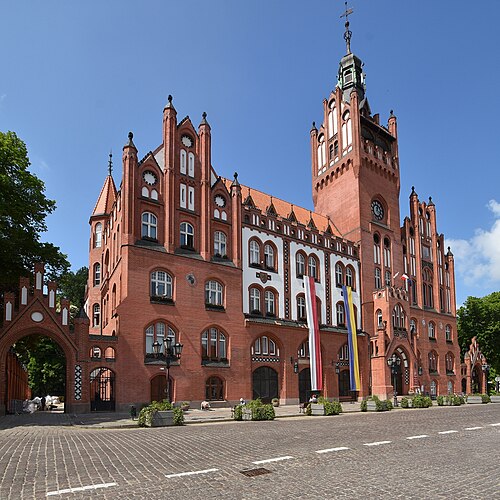
Słupsk is a city located in northern Poland, situated on the Słupia River, approximately 18 kilometers from the Baltic Sea coast. As the capital of Słupsk County and an important urban center in the Pomeranian Voivodeship, the city has a rich historical background dating back to the early Middle Ages. It was first mentioned in historical documents in 1253, when it was granted town rights. Throughout its history, Słupsk has experienced numerous changes in governance and demographics, being part of various states and empires, including the Pomeranian Duchy, Prussia, and Germany. After World War II, the city became part of Poland, leading to significant shifts in its population as German residents left and Polish settlers arrived.
Słupsk is known for its well-preserved architectural heritage, which reflects its diverse history. Key landmarks include the Gothic-style St. Mary's Church, which dates back to the 14th century, and the Renaissance-era Słupsk Castle, originally built as a fortress and later repurposed as an administrative building. The city also boasts a vibrant cultural scene with numerous museums, theaters, and galleries. The historical Museum of Central Pomerania and the unique interactive technology museum, Ośrodek Kultury i Sztuki, showcase the region's heritage and modern creativity. Słupsk is surrounded by beautiful natural landscapes, including the Słowiński National Park, characterized by its shifting sand dunes, coastal lakes, and rich biodiversity, making it an attractive destination for nature enthusiasts. With a population of around 90,000, Słupsk is a hub for trade and commerce in the region, and its strategic location fosters connections with other significant urban centers in Poland and beyond.
Facts about Słupsk
- Słupsk is known for its unique blend of Gothic and Renaissance architecture, highlighted by the 13th-century Gothic Cathedral of St. Mary.
- The city is home to the famous castle of the Dukes of Pomerania, which is a significant historical and architectural landmark in the region.
- Słupsk boasts a rich artistic heritage, being the birthplace of famed Polish painter-Witkacy, who was influential in the realms of theater and visual arts.
- The city hosts the annual Słupsk International Street Art Festival, which attracts artists and performers from around the world, showcasing diverse contemporary art forms.
- Słupsk has a unique geographical feature, as it is located close to both the Baltic Sea and the Słupia River, providing scenic natural landscapes.
- It is the only city in Poland with a preserved wooden 18th-century granary, known as the 'Biały Spichlerz' (White Granary), showcasing traditional architecture.
- Słupsk has a vibrant local culture, characterized by the Baltic Festival, celebrating the maritime heritage of the region every summer.
- The city is well-regarded for its high educational standards and is home to a branch of the Pomeranian University, which specializes in social sciences and humanities.
- Unique to Słupsk, the city has been a significant center for the production and trade of hand-made ceramics, known for its quality and craftsmanship.
- Słupsk played an important role in both World War I and II, having been a center for military strategy and operations, adding depth to its historical narrative.