Soest, Germany
- 48,037 people
- 10 places to visit
- 51.5714, 8.1105
Places to Visit (10)
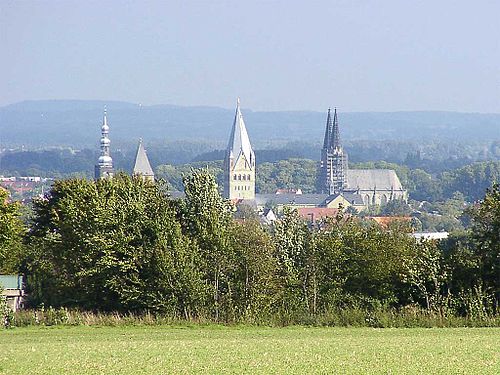
Soest is a historic city located in North Rhine-Westphalia, Germany, known for its rich heritage and picturesque landscape. Situated on the banks of the River Soest, a tributary of the Lippe, the city is approximately 40 kilometers southeast of Dortmund. With a population of about 47,000 residents, Soest serves as a regional center for trade and commerce, as well as a gateway to exploring the scenic Sauerland region. The city boasts a well-preserved medieval core, characterized by cobbled streets and numerous half-timbered houses, reflecting its historical significance that spans back over a thousand years.
One of Soest's most notable landmarks is the St. Patrokli Church, a stunning example of Romanesque architecture that dates back to the 11th century. The church features an impressive bell tower and intricate frescoes, which attract visitors and locals alike. Additionally, the city's history is intertwined with its fortifications, as remains of its medieval walls and gates can still be seen today, adding to the charm of Soest. The annual Soest Fair, held since the 13th century, is a cultural highlight that draws crowds from the surrounding area, featuring traditional crafts, local delicacies, and vibrant entertainment. Soest also offers various parks and recreational areas, such as the Stadtpark and the scenic banks of the River Soest, making it an inviting destination for outdoor enthusiasts.
Apart from its historical allure, Soest has a dynamic modern community with a variety of educational institutions, shopping venues, and cultural activities. It is renowned for its vibrant arts scene, including galleries, museums, and theaters that showcase both local and international talents. The city's commitment to preserving its heritage while embracing contemporary advancements creates a unique blend of old and new. With its charming atmosphere, cultural richness, and strategic location, Soest stands out as a captivating destination for both tourists and residents, embodying the historical depth and modern vitality of Germany.
Facts about Soest
- Soest is known for its well-preserved medieval architecture, with many buildings dating back to the 11th century, including the impressive St. Patrokli Cathedral.
- The city is located on the banks of the River Soest, which is unique as it played a crucial role in the city's development during the Middle Ages, providing water transportation and trade routes.
- Soest is famous for its 'Soest War', a historical event in the 16th century where the city resisted an attack by the forces of the Duke of Cleves, signifying its strategic importance.
- The city's Old Town is characterized by its striking timber-framed houses, and it features one of the largest remaining fortified medieval walls in Germany.
- Soest hosts the annual 'Soest City Festival', which celebrates local culture and history, drawing visitors from around the region for parades, music, and food.
- The city is home to the Soest Historical Museum, which showcases artifacts and exhibits covering the city's rich history from ancient times to the present.
- Soest is renowned for its unique 'Soest-style' of beer brewing, particularly the traditional 'Soester Pils', which has roots in the region's brewing heritage.
- In Soest, one can find the ancient relics of the 'Siegfried Line', a historical defense line from World War II, adding to the city's wartime heritage.
- The city prides itself on its green spaces, including the beautiful spa gardens (Kurpark) that offer a tranquil setting for relaxation and events.
- Soest is part of the scenic Route of the Mill (Mühlenroute), connecting various historic windmills and watermills throughout the region, highlighting its agricultural history.