Sofia, Bulgaria
- 1,152,556 people
- 8 places to visit
- 42.6977, 23.3219
Places to Visit (8)
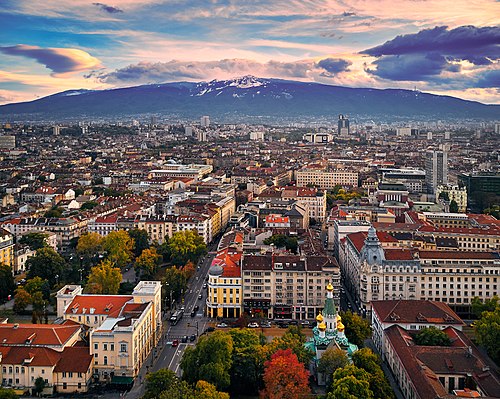
Sofia, the capital city of Bulgaria, is one of the oldest continuously inhabited cities in Europe, with a history that dates back over 2,000 years. Originally established by the Thracians, it was later known as Serdica during Roman times, and its rich cultural heritage has made it a focal point of Bulgarian history. The city is located in the western part of the country, nestled at the foot of Mount Vitosha, which significantly influences its climate and scenery. Today, Sofia is a vibrant urban center with a population of around 1.2 million, making it the largest city in Bulgaria. The city serves as a political, economic, and cultural hub, reflecting a blend of modern and historical elements that appeal to both residents and visitors.
Sofia boasts a diverse architectural landscape that showcases its historical progression, from Roman ruins and medieval churches to modernist buildings and contemporary skyscrapers. Notable landmarks include the stunning Alexander Nevsky Cathedral, an iconic symbol of the city, and the National Palace of Culture, which is a center of various cultural events. The city also offers numerous parks and green spaces, providing a breath of fresh air amidst urban life. Sofia's economy has diversified in recent years, with sectors such as information technology, telecommunications, and light industry gaining prominence. The city is home to several institutions of higher education, including Sofia University, which contributes to its reputation as a center for learning and research in the Balkans. Additionally, Sofia's vibrant nightlife, with an array of cafes, bars, and restaurants, and its cultural festivals, add to its appeal, attracting tourists from around the world.
Despite its challenges, such as air pollution and urban development issues, Sofia remains a city of resilience and transformation. It has embraced its heritage while striving for modernization, making it an intriguing destination for those interested in exploring the crossroads of history and contemporary life in Bulgaria. As it continues to evolve, Sofia captures the spirit of a nation forging its identity in a rapidly changing world, offering a unique glimpse into both the past and the future.
Facts about Sofia
- Sofia is one of the oldest cities in Europe, with a history that dates back over 2,500 years.
- The city is home to the Boyana Church, a UNESCO World Heritage site renowned for its medieval frescoes dating back to the 13th century.
- Sofia has a unique geographical location, situated at the foot of Mount Vitosha, providing residents and visitors with easy access to both urban and natural landscapes.
- It houses the Alexander Nevsky Cathedral, one of the largest and most impressive Eastern Orthodox cathedrals in the world, completed in 1912.
- The city's name, Sofia, originates from the Greek word 'Sophia', meaning wisdom, and reflects its historical roots in ancient Thrace and Byzantium.
- Sofia has a vibrant cultural scene, being the host city for events like the Sofia Film Fest, which is one of the most significant film festivals in Southeast Europe.
- The city is home to the National Palace of Culture (NDK), the largest multifunctional conference and exhibition center in Southeast Europe, established in 1981.
- It features the Serdica archaeological complex, revealing layers of Roman, Byzantine, and Ottoman history, which can be seen through the glass floors in the city center.
- Sofia operates one of the longest metro systems in the Balkans, known for its efficiency and rapid expansion, making public transport accessible.
- As the capital of Bulgaria, Sofia is the political, economic, and cultural center of the country, housing most government institutions and foreign embassies.