Soissons, France
- 31,100 people
- 7 places to visit
- 49.3766, 3.3234
Places to Visit (7)
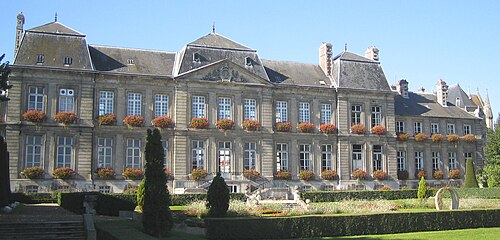
Soissons is a commune in the Aisne department in the northern region of Hauts-de-France, France. It is situated approximately 100 kilometers northeast of Paris and holds a strategic historical significance due to its location along the banks of the Aisne River. The city has a rich heritage, tracing its origins to at least Roman times, when it was known as "Suessiones" and served as the capital of the Suessiones tribe. This ancient settlement boasts several historical structures, including remnants of Roman architecture, such as the impressive amphitheater and the ruins of the Roman aqueduct. The city was an important site during the early medieval period and later became the burial place for several Merovingian kings, further solidifying its place in French history.
With a population of around 27,000 residents, Soissons combines its historical significance with a vibrant modern community. The city's notable landmarks include the Gothic-style Cathedral of Saint-Gervais and Saint-Protais, known for its stunning stained glass windows and detailed sculptures, which reflect the transition between Romanesque and Gothic architecture. Soissons has also been recognized for its role during World War I, suffering significant damage but later rebuilding to reflect resilience. The city hosts numerous cultural events and festivals, celebrating local traditions and enhancing community spirit. Today, Soissons is characterized by a mix of historical charm and contemporary life, drawing visitors interested in both its past and present. Its economy is primarily supported by agriculture, commerce, and an increasing emphasis on tourism, making it a unique destination in northern France.
Facts about Soissons
- Soissons is known for the historic Soissons Cathedral, a stunning example of Gothic architecture that dates back to the 13th century.
- The city played a significant role during the Merovingian and Carolingian dynasties, serving as an important political and religious center in early medieval France.
- Soissons is famously associated with the myth of the Soissons Vase, a valuable relic that was reportedly smashed by Clovis I, illustrating the conflict between royal authority and the church.
- It was in Soissons that the Treaty of Soissons was signed in 1576, marking an important moment in the French Wars of Religion.
- The city suffered extensive damage during World War I and was rebuilt after the war, making it a notable example of post-war reconstruction in France.
- Soissons is situated along the Aisne River, giving it a unique geographical feature compared to many other French towns that are located inland.
- The city hosts an annual festival called 'Festival de Soissons,' which celebrates local culture, history, and gastronomy, attracting visitors from across the region.
- Soissons has several archaeological sites, including remnants from Roman times, which distinguish it as a place with deep historical significance.
- The City Hall of Soissons features an impressive clock tower, which has become an iconic symbol of the city.
- Soissons is part of the former province of Champagne, giving it a unique cultural heritage, including its local cuisine and wine production.