Souk Ahras, Algeria
- 153,479 people
- 2 places to visit
- 36.28, 7.9383
Places to Visit (2)
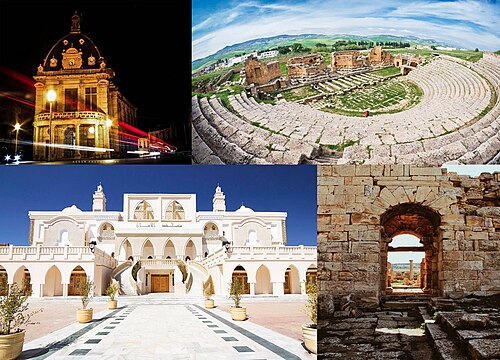
Souk Ahras is a city located in northeastern Algeria, serving as the capital of Souk Ahras Province. Positioned near the Tunisian border, approximately 500 kilometers east of Algiers, the city is part of a region characterized by its rich historical significance and diverse landscapes. The area surrounding Souk Ahras is known for its agricultural production, particularly olive cultivation, which plays a vital role in the local economy. The city's population is predominantly Arab-Berber, reflecting the broader cultural tapestry of Algeria. Historically, Souk Ahras has been a significant settlement, with roots tracing back to ancient times when it was known as Thagaste, the birthplace of the renowned Christian philosopher Saint Augustine in the 4th century.
In modern times, Souk Ahras has developed into an important administrative and commercial center. The city's architecture is a blend of traditional and colonial influences, with numerous buildings featuring vibrant colors and intricate designs. Transport infrastructure includes road networks connecting it to other major cities, facilitating trade and travel. The city hosts several educational institutions, contributing to the local workforce and promoting cultural activities. Additionally, Souk Ahras is marked by its proximity to various natural attractions, including the picturesque Aurès Mountains, which appeal to both locals and tourists seeking outdoor activities such as hiking. Overall, Souk Ahras exemplifies a city that balances its historical heritage with contemporary development, embodying the dynamic spirit of Algeria.
Facts about Souk Ahras
- Souk Ahras is known for its rich Roman history, with nearby ruins such as Timgad and the Roman city of Thubursicu Numidarum, showcasing well-preserved ancient architecture.
- The city serves as a significant crossroads for trade and transportation due to its geographic location near the borders of Tunisia and Libya.
- Souk Ahras was the birthplace of several notable Algerian figures, including the national hero Ahmed Bey and important revolutionary leaders during the Algerian War of Independence.
- In the 19th century, Souk Ahras became a key site of resistance against French colonial forces, playing a vital role in Algeria's struggle for independence.
- The city's annual cultural events highlight its diverse heritage, blending Berber, Arab, and French influences, making it a unique melting pot within Algeria.
- Souk Ahras is home to the Lalla Meriem Mosque, which features intricate architecture and is an important religious site for the local community.
- The surrounding mountainous region offers stunning natural landscapes, including the Aurès Mountains, attracting visitors for hiking and eco-tourism.
- The city hosts the souk (market) that takes place weekly, where local artisans sell traditional crafts, textiles, and agricultural products, reflecting the region's rich cultural practices.
- Souk Ahras has a largely agrarian economy, known for producing olives and fruits, setting it apart from more industrialized cities in Algeria.
- The region's unique climate helps contribute to the cultivation of high-quality wine grapes, giving Souk Ahras a distinctive place in Algeria's wine production landscape.