Split, Croatia
- 149,830 people
- 8 places to visit
- 43.5147, 16.4435
Places to Visit (8)
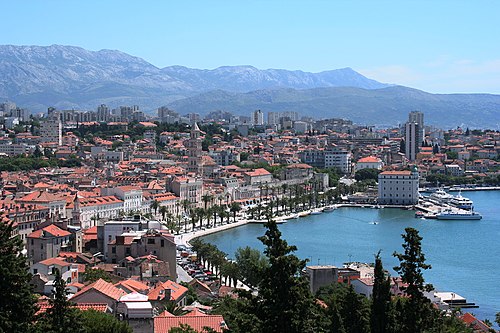
Split, located on the eastern coast of the Adriatic Sea in Croatia, is the largest city in the Dalmatia region and serves as a crucial cultural and economic hub. Founded in the 3rd century AD as the site of the Roman Emperor Diocletian's retirement palace, Split is renowned for its rich history and eclectic architecture. The Diocletian Palace, a UNESCO World Heritage Site, is the city's centerpiece and one of the best-preserved monuments of Roman architecture in the world. Its impressive walls, towering gates, and ancient structures have attracted visitors for centuries, making Split a popular tourist destination.
Beyond its historical significance, Split is known for its vibrant atmosphere, combining a modern urban life with traditions that date back thousands of years. The city's waterfront promenade, known as the Riva, is lined with cafes, shops, and restaurants, offering spectacular views of the harbor and the nearby islands. The city's cultural scene is alive with numerous festivals, concerts, and art exhibitions throughout the year. Split's favorable Mediterranean climate contributes to its popularity, making it an ideal location for outdoor activities, including sailing, hiking, and beach relaxation. The nearby archipelago, consisting of islands like Hvar and Brač, adds to Split's allure, making it a perfect base for exploring the stunning Dalmatian coastline.
Split's economy is primarily driven by tourism, but it also has strong sectors in trade, shipbuilding, and manufacturing. The city boasts a diverse populace, enriched by its history as a crossroads of various cultures and civilizations. As a contemporary metropolis, Split is equipped with modern amenities, schools, and healthcare facilities, while still showcasing its legacy through museums, galleries, and cultural heritage sites. With its unique blend of historic charm, natural beauty, and modern living, Split continues to captivate both residents and visitors alike, serving as a vital gateway to the culture and beauty of Croatia.
Facts about Split
- Split is home to Diocletian's Palace, one of the best-preserved Roman ruins in the world, built in the 4th century AD.
- The city of Split serves as a vital transport hub, featuring the largest ferry port in Croatia, connecting to various islands in the Adriatic Sea.
- Split has the unique distinction of being the birthplace of the famous Croatian football player Luka Modrić, who won the Ballon d'Or in 2018.
- The city hosts the annual Split Summer Festival, a cultural event that showcases theater, music, and dance performances in stunning historical venues.
- Split's Riva, a famous waterfront promenade, is recognized for its vibrant atmosphere, cafes, and restaurants overlooking the Adriatic Sea.
- Split is the economic center of Dalmatia, with a booming tourism industry and a strong maritime economy.
- The Mestrovic Gallery in Split features works by the acclaimed Croatian sculptor Ivan Meštrović, who is celebrated for his contributions to both sculpture and architecture.
- The city has a historic Jewish community, with the oldest active synagogue in Europe, which dates back to the 16th century.
- Split also boasts beautiful beaches, such as Bačvice, which is famous for its shallow waters and beach volleyball tournaments.
- The Historic Complex of Split with the Palace of Diocletian was inscribed as a UNESCO World Heritage site in 1979, recognizing its cultural significance.