St. John's, Canada
- 110,525 people
- 16 places to visit
- 47.5556, -52.7453
Places to Visit (16)
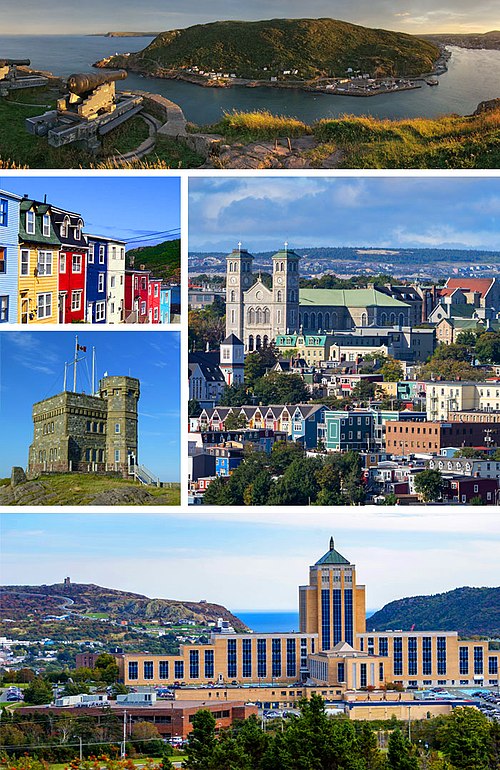
St. John's, the capital city of Newfoundland and Labrador, Canada, is situated on the northeastern tip of the Avalon Peninsula, along the Atlantic coast. Founded around 1497 by Italian explorer John Cabot, it is one of the oldest continuously inhabited cities in North America, with a rich maritime history. The city's name is believed to have been derived from the Feast of the Nativity of St. John the Baptist, which coincides with its discovery. St. John's is known for its colorful row houses, lively cultural scene, and natural beauty, including rugged coastlines and picturesque harbors. The city has a population of approximately 110,000 residents, making it both the largest city in Newfoundland and Labrador and a key center for education, industry, and culture in the region.
Economically, St. John's has evolved from a traditional reliance on fishing and maritime activities to a more diversified economy that includes sectors such as oil and gas, tourism, and technology. The city serves as a hub for offshore oil production, capitalizing on the resources of the North Atlantic. Tourism plays a significant role in the local economy, drawing visitors to attractions such as Signal Hill, which offers stunning views of the harbor, and Cape Spear, the easternmost point in North America. St. John's is also known for its vibrant arts and music scene, hosting events such as the George Street Festival and the Newfoundland and Labrador Folk Festival, which celebrate the area's rich cultural heritage.
In terms of education, St. John's is home to Memorial University of Newfoundland, one of the largest universities in Atlantic Canada, providing a wide range of programs and contributing to research and innovation in the region. The city's climate is characterized as humid continental, with cold winters and mild summers, which influences local lifestyle and outdoor activities, such as hiking in nearby parks and coastal trails. Overall, St. John's is a unique blend of historical significance, economic diversity, and vibrant community life, making it an important cultural and economic center in Canada.
Facts about St. John's
- St. John's is the capital and largest city of Newfoundland and Labrador, Canada, and is known as one of the oldest European-established cities in North America, with a history dating back to 1497.
- The iconic Signal Hill, located in St. John's, is a historic site famous for being the location where the first transatlantic wireless transmission was received by Guglielmo Marconi in 1901.
- St. John's boasts the colorful row houses of Jellybean Row, which are one of the most photographed aspects of the city and reflect its unique architectural heritage.
- The city is renowned for its beautiful natural harbor, which is one of the most significant in North America and has historically served as an important fishing and shipping port.
- St. John's hosts the annual George Street Festival, which is one of North America's largest outdoor music festivals, celebrating local and national music over the course of several days.
- The Basilica of St. John the Baptist, a historic Roman Catholic church in St. John's, features stunning architecture and vibrant stained glass, making it a prominent landmark in the city.
- St. John's is also known for Cape Spear, the easternmost point in North America, which offers breathtaking views of the Atlantic Ocean and is home to a historic lighthouse.
- The city has a rich cultural scene, with numerous arts festivals, including the St. John's International Women's Film Festival and the Newfoundland and Labrador Folk Festival.
- St. John's is the starting point for The Trans-Canada Highway, making it a significant transportation hub in the province and an essential link for mainland Canada.
- The unique coastal climate of St. John's, combined with its geological features, contributes to a biodiversity that is not only beautiful but also provides unique opportunities for outdoor activities.