Stanley, Falkland Islands
- 2,213 people
- 8 places to visit
- -51.6928, -57.862
Places to Visit (8)
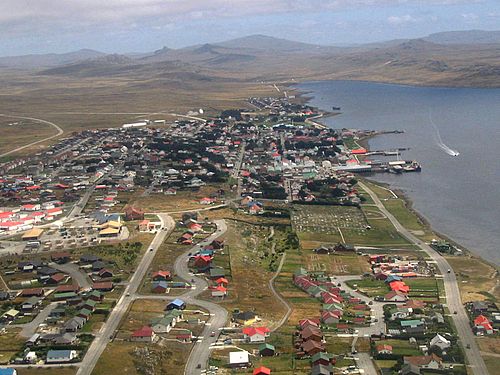
Stanley, the capital of the Falkland Islands, is the archipelago's largest settlement and the primary administrative and economic center. Located on the east coast of East Falkland, Stanley is situated within a natural harbor, known as Stanley Harbor, which provides a safe anchorage for ships. The town is home to approximately 2,100 residents, most of whom are of British descent, reflecting the islands' colonial history. Stanley serves as the hub for both government and military activities, with the Falkland Islands Government's offices, as well as a British military presence dating back to the 1982 conflict with Argentina. The local economy is primarily supported by fisheries, tourism, and sheep farming, with the latter historically being a significant industry in the region.
Stanley features several notable landmarks, including the historic Christ Church Cathedral, famous for its unique whalebone arch, and the Falkland Islands Museum, which showcases the islands' rich history, natural environment, and diverse culture. The town is characterized by colorful houses and a quaint, charming atmosphere, offering visitors a blend of natural beauty and historical significance. Despite its remote location, Stanley is accessible via air travel, with the Falkland Islands International Airport situated about 30 kilometers away, enabling flights from the UK and South America. Visitors often explore the stunning landscapes surrounding the town and engage with the islands' wildlife, including penguins and seals, enhancing Stanley's appeal as a unique travel destination in the South Atlantic. The town's blend of British heritage and resilient spirit continues to define its character and community as it moves toward the future while cherishing its storied past.
Facts about Stanley
- Stanley is the capital and largest city of the Falkland Islands, serving as the political, economic, and cultural center of the territory.
- The city is named after Lord Stanley, who was the British Secretary of State for War and the Colonies at the time the islands were annexed in 1841.
- Stanley has a distinct local architecture, characterized by brightly colored corrugated iron houses, a design that reflects the practical needs of the island's weather conditions.
- The city is home to the historic Christ Church Cathedral, which features a whalebone arch made from the jawbones of a blue whale and is a unique landmark in the city.
- Stanley's Falkland Islands Museum houses a collection of artifacts and exhibits that narrate the rich history of the islands, including the period of the 1982 Falklands War.
- The annual Stanley Sheepdog Trials celebrate the islands' sheep farming heritage and showcase the skills of local shepherds and their dogs.
- Stanley is the key port for the Falkland Islands, with a deep-water harbor that facilitates access for fishing and tourism industries, distinguishing it from other towns.
- The city hosts the annual Falkland Islands Independence Day celebrations, an event highlighting the islands' sense of identity and cultural heritage.
- Stanley has the only public library in the Falkland Islands, which also serves as a community hub for educational and cultural events.
- The city contains several war memorials that commemorate those who fought in the conflict of 1982, serving as a poignant reminder of the islands' turbulent history.