Strasbourg, France
- 274,845 people
- 18 places to visit
- 48.5734, 7.7521
Places to Visit (18)
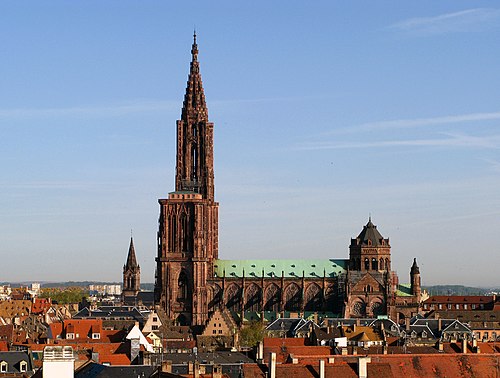
Strasbourg, the capital of the Alsace region in northeastern France, is a city of profound historical and cultural significance. Nestled along the Rhine River, it is located near the border with Germany, which has profoundly influenced its architecture, cuisine, and culture. Strasbourg has a unique position as an emblem of Franco-German reconciliation, serving as the seat of several European institutions, including the European Parliament and the Council of Europe. The city’s vibrant history dates back to Roman times, when it was known as Argentoratum, and it later became a free city of the Holy Roman Empire. This rich heritage is evident in its iconic landmarks, such as the stunning Strasbourg Cathedral, a masterpiece of Gothic architecture that towers above the city with its intricate façade and astronomical clock, attracting visitors from around the world.
In addition to its architectural marvels, Strasbourg is renowned for its picturesque neighborhoods, particularly La Petite France. This charming area, characterized by half-timbered houses, cobblestone streets, and canals, offers a glimpse into the city’s medieval past. The city's cultural offerings are equally impressive, with numerous museums, theaters, and galleries that showcase both local and international art. Strasbourg is also famous for hosting one of the oldest and most famous Christmas markets in Europe, drawing tourists during the holiday season. Furthermore, the city is a hub of gastronomy, offering a unique blend of French and German cuisines, with local specialties such as tarte flambée and Báckerla. The blend of cultures is also reflected in the local dialect, Alsatian, which combines elements of German and French.
Strasbourg's strategic location, rich history, and cultural diversity make it a significant city in both France and Europe. It is a vibrant place where tradition meets modernity, serving as a center for political, economic, and cultural activities. The integration of diverse cultures enriches the local community and fosters a spirit of cosmopolitanism. With its dynamic atmosphere, stunning landscapes, and historical significance, Strasbourg continues to be a pivotal city that embodies the complexities and beauty of European identity.
Facts about Strasbourg
- Strasbourg is home to the European Parliament, making it one of the key political centers of the European Union.
- The city's Grand Île was designated a UNESCO World Heritage site in 1988, noted for its unique blend of German and French architectural styles.
- Strasbourg features the stunning Cathedral of Our Lady, which was the tallest building in the world from 1647 until 1874.
- The city has a signature dish known as 'choucroute garnie,' a hearty meal of sauerkraut and various meats, reflecting its Alsatian culinary heritage.
- Strasbourg is famous for its Christmas market, Christkindelsmarik, one of the oldest and most traditional in Europe, dating back to 1570.
- The city’s historic district, La Petite France, is characterized by its well-preserved 16th-century half-timbered houses and picturesque canals.
- Strasbourg has a rich history as a center for printing and publishing, with Johannes Gutenberg, the inventor of the printing press, being born nearby.
- The city plays host to the Strasbourg Museum of Modern and Contemporary Art, which houses a significant collection of contemporary artworks.
- Strasbourg is the birthplace of notable figures such as philosopher Rousseau and poet Paul Verlaine, influenced by its unique cultural environment.
- The city is a hub for international organizations, including the Council of Europe and the European Court of Human Rights, emphasizing its diplomatic significance.