Sucre, Bolivia
- 224,838 people
- 15 places to visit
- -19.0353, -65.2592
Places to Visit (15)
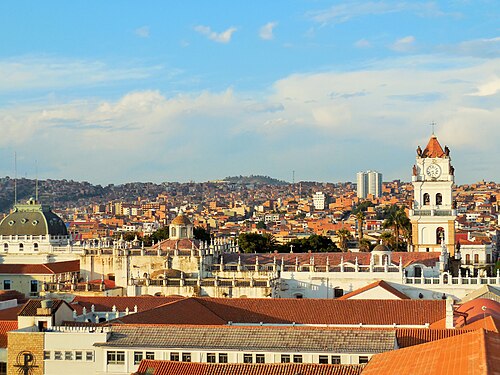
Sucre, the constitutional capital of Bolivia, is a city rich in history and culture, nestled in the south-central part of the country. Established in 1538 by Spanish conquistador Pedro Anzúrez de Avena, it was originally named La Plata and served as a key center during the colonial period. Sucre has played a significant role in Bolivia’s fight for independence, being the site of the first declaration of independence from Spanish rule in 1809. In recognition of its historical importance, the city was designated a UNESCO World Heritage Site in 1991, notable for its well-preserved colonial architecture, which includes churches, government buildings, and charming plazas.
The city is characterized by its mild climate and stands at an elevation of approximately 2,800 meters (9,186 feet) above sea level. Sucre is home to several important educational institutions, including the Universidad Mayor, Real y Pontificia de San Francisco Xavier de Chuquisaca, which is one of the oldest universities in the Americas. This academic presence attracts students from various regions, contributing to the city's vibrant cultural tapestry. The city celebrates numerous festivals throughout the year, with traditional music, dance, and food playing a central role in communal festivities. Notable events include the festivities of Santa Semana, showcasing the religious and cultural significance of the city, and the annual festival of La Diablada, which features colorful parades and traditional costumes.
Sucre also serves as a key economic center for the region, relying on agriculture, tourism, and education as primary sectors. The local economy benefits from the surrounding fertile lands that yield crops such as corn, potatoes, and wheat. Additionally, the city attracts tourists drawn by its historical significance, beautiful landscapes, and the unique charm of its colonial streets. As a blend of rich history and modern life, Sucre embodies the diverse heritage of Bolivia, making it an essential stop for visitors seeking to understand the nation’s past and present.
Facts about Sucre
- Sucre is the constitutional capital of Bolivia, while La Paz serves as the seat of government.
- The city is known for its well-preserved colonial architecture, with over 100 buildings declared as national heritage sites.
- Sucre is home to the famous Tarabuco Market, known for its vibrant indigenous textiles and artisan crafts.
- The city was where the Declaration of Independence was signed in 1825, marking the official end of Spanish rule in Bolivia.
- Sucre hosts the annual Festival of the Our Lady of Guadalupe, which attracts thousands of visitors and showcases local traditions.
- The University of San Francisco Xavier, founded in 1624, is one of the oldest universities in the Americas and is located in Sucre.
- The city features the only open-air museum in Bolivia, the Museo de la Recoleta, which showcases local history and culture.
- Sucre’s unique climate gives it the nickname 'The City of Eternal Spring', attracting tourists year-round due to its pleasant weather.
- The Parque Cretácico, located near Sucre, is renowned for its significant dinosaur footprints, offering insights into prehistoric life in Bolivia.
- Sucre celebrates a distinct form of cultural expression known as 'chicha', a traditional beverage made from fermented corn, often enjoyed during local festivities.