Suez, Egypt
- 699,541 people
- 4 places to visit
- 29.9668, 32.5498
Places to Visit (4)
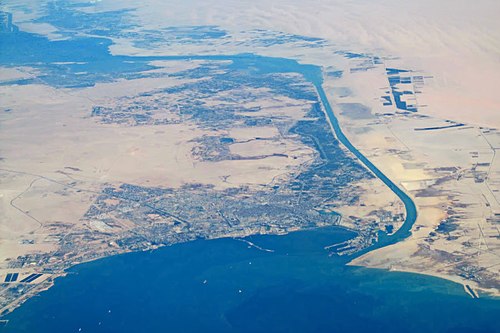
Suez is a city located in northeastern Egypt, situated at the northern entrance of the Suez Canal, a significant waterway that connects the Mediterranean Sea to the Red Sea. With a population of approximately 600,000 people, Suez serves as a crucial hub for maritime trade and transportation. The city has a rich history, dating back to ancient times when it was known as a key center for trade and commerce in the region. Its strategic location made it a focal point for various civilizations, including the Egyptians, Greeks, Romans, and later the Ottoman Empire.
The Suez Canal, completed in 1869, transformed the city into a vital conduit for international shipping, significantly impacting global trade patterns. The canal drastically reduces the travel distance between Europe and Asia, making Suez an essential point for vessels transporting goods. The economy of Suez is heavily reliant on the canal and the surrounding port facilities, alongside industries such as fishing, shipping, and petroleum refining. In addition to its economic significance, the city is also known for its cultural heritage, with various historical sites and modern amenities that attract both residents and visitors.
Suez has faced challenges over the years, including geopolitical tensions and environmental issues related to shipping and industrial activities. However, efforts have been made to modernize and expand the canal, including the addition of a new parallel channel in 2015, designed to increase the canal’s capacity and efficiency. Today, Suez stands not only as a critical maritime gateway but also as a city that embodies the interplay between history and modernity, reflecting Egypt's ongoing role in global trade and commerce.
Facts about Suez
- Suez is home to the Suez Canal, one of the most important waterways in the world, completed in 1869, allowing ships to travel between Europe and Asia without navigating around Africa.
- The city has a unique strategic location as it serves as the gateway to the Red Sea and the Mediterranean, making it a critical point for international trade and naval operations.
- Suez was the site of significant military operations during the Suez Crisis of 1956, a pivotal event in modern Middle Eastern history that involved Egypt, Israel, Britain, and France.
- The city's economy is heavily reliant on the maritime industry due to its proximity to the Suez Canal, with numerous port facilities supporting both commercial shipping and fishing industries.
- Suez has a diverse cultural heritage influenced by its historical role as an international trade hub, with architecture and community dynamics reflecting various eras and cultures.
- Unlike many other Egyptian cities, Suez experienced a considerable dislocation of its population during the 1967 war, which had long-term effects on its social and economic fabric.
- Suez has several important industrial zones that contribute to Egypt's economy, focusing on oil refining, shipbuilding, and logistics due to its strategic location near the canal.
- The city promotes tourism with landmarks such as the Suez Canal Authority Building and the famous 'Suez Canal Monument' which highlight its historical significance.
- Suez is characterized by its relatively modern infrastructure compared to other cities in Egypt, benefiting from extensive investment due to its economic importance.
- The city’s history as a transport nexus has made it a melting pot of cultures, leading to a unique social landscape that differentiates it from more traditional Egyptian towns.