Szczecin, Poland
- 407,811 people
- 16 places to visit
- 53.4285, 14.5528
Places to Visit (16)
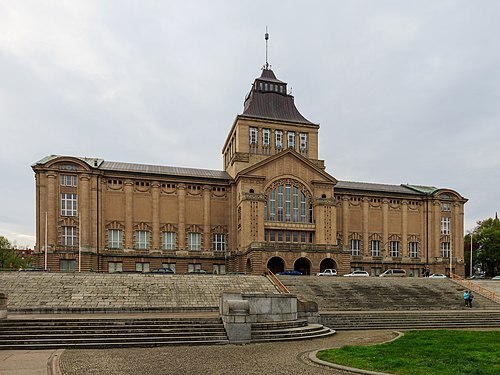
Szczecin, located in northwestern Poland, is the capital of the West Pomeranian Voivodeship and one of the country's largest cities. With a population of approximately 400,000, it is the seventh most populous city in Poland. Szczecin lies on the Oder River estuary, close to the Baltic Sea, which has historically positioned it as an important port city and a significant hub for maritime trade and industry. The city's geographical location has helped shape its rich history, which dates back to the early Middle Ages when it was a Slavic settlement. Over the centuries, Szczecin has been influenced by various cultures and nations, notably as part of the Kingdom of Poland, the Duchy of Pomerania, and even Prussia and Germany before becoming part of Poland after World War II.
The city is known for its unique blend of architectural styles, which include Gothic, Renaissance, and modernist designs. Notable landmarks include the Pomeranian Dukes' Castle, a symbol of the city's historical significance, and the St. James Cathedral, which features impressive stained-glass windows and intricate sculptures. Szczecin is also home to numerous parks and green spaces, making it one of Poland's greenest cities. The Central Cemetery, one of Europe's largest cemeteries, is notable for its tranquil ambiance and impressive monuments. Cultural life in Szczecin is vibrant, with numerous theaters, galleries, and music festivals, including the popular "Szczecin Music Fest" and the "Szczecin Baltic Trip." The city also promotes its status as a scientific and educational center, hosting several universities and research institutions.
Post-war reconstruction transformed Szczecin, leading to significant urban development and expansion. The city has embraced modernization while preserving its historical heritage, resulting in a dynamic urban landscape characterized by both old and new structures. In recent years, Szczecin has positioned itself as a center for logistics and technology, capitalizing on its strategic location and well-developed transport infrastructure. The city continues to attract investment and is focused on enhancing its economic potential, tourism, and quality of life for its residents. As a testament to its diverse and storied past, Szczecin remains a vibrant city that reflects the complex history and cultural richness of Poland.
Facts about Szczecin
- Szczecin is home to the largest port in Poland and is one of the biggest ports on the Baltic Sea, playing a crucial role in maritime trade.
- The city's name derives from the West Slavic word 'szczec,' meaning 'bristle,' referring to a species of plant that grows in the area.
- Szczecin features a unique mix of architectural styles, including Gothic, Baroque, and modernist designs, reflecting its diverse history and influences.
- The Pomeranian Duke's Castle (Zamek Książąt Pomorskich), located in the city, was once the residence of the Dukes of Pomerania and is now a cultural center.
- Szczecin is known for its extensive green spaces, including the Wkrzyckie and Jasne Błonia parks, making it one of the greenest cities in Poland.
- The city's Szczecin Philharmonic concert hall, opened in 2014, is renowned for its avant-garde architecture and exceptional acoustics, attracting international events.
- In 1980, Szczecin was a key site for the Solidarity movement, which challenged Communist rule in Poland, significantly impacting the country's political landscape.
- Szczecin hosts the annual 'Tall Ships Races,' attracting maritime enthusiasts with stunning sailing vessels from around the world.
- The city has a rich maritime history, with the Szczecin Maritime Museum showcasing its seafaring heritage and naval traditions.
- Szczecin is the only major Polish city to be located close to the German border, fostering a unique multicultural and cross-border connection with Germany.