Taiz, Yemen
- 615,222 people
- 3 places to visit
- 13.5776, 44.0178
Places to Visit (3)
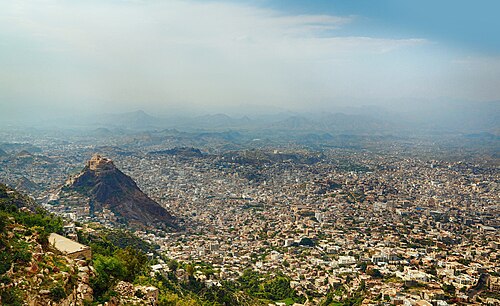
Taiz is a city located in the southwestern part of Yemen, surrounded by mountains and known for its rich history and cultural significance. It is the capital of Taiz Governorate and has a population of approximately 600,000 inhabitants, making it one of Yemen's largest cities. Taiz is situated at an elevation of around 1,400 meters above sea level, which provides a subtropical highland climate, characterized by mild temperatures and seasonal rainfall. The city's terrain, marked by steep hills and valleys, has historically made it a strategic location for trade and defense. The area has been inhabited for centuries, with its history tracing back to ancient times, evident in various historical sites, including the well-preserved architectural remnants of mosques, fortresses, and traditional houses.
The cultural landscape of Taiz is rich, reflecting a blend of Arab and Islamic influences. The city has been a center of education and intellectual life, with numerous schools, universities, and libraries dating back to the medieval period. Historically, Taiz played a significant role as a political and economic hub, serving as the capital of Yemen during different periods, including in the 15th century under the Rasulid dynasty. The city is also known for its contributions to Yemeni literature and arts, showcasing a vibrant heritage that continues to influence the broader cultural scene in Yemen. Taiz is famous for its coffee production, particularly the Arabica variety, and the local coffee culture remains an important aspect of life for its residents.
In recent years, Taiz has faced significant challenges, particularly due to the ongoing conflict in Yemen that began in 2015. The city has been a focal point of clashes between Houthi forces and government troops, leading to severe humanitarian crises, including food shortages, infrastructural damage, and the disruption of essential services. Despite these hardships, the resilience of the local population and their efforts to maintain cultural traditions and community cohesion remain remarkable. The humanitarian situation in Taiz continues to attract international attention, and various organizations are working to provide assistance to those affected by the conflict. As Taiz navigates the complexities of war and recovery, its historical significance and cultural richness persist, symbolizing the enduring spirit of its people amidst adversity.
Facts about Taiz
- Taiz is known as the cultural capital of Yemen, housing one of the country’s oldest universities, the Taiz University, which was established in 1993.
- The city is famous for its picturesque setting in the Yemeni highlands, surrounded by mountains, which distinguishes it from flatland cities.
- Taiz played a significant role in Yemen's history, particularly during the 1962 revolution, where it was a center for political movements advocating for change.
- One of the most prominent historical landmarks in Taiz is the Al-Qahira Citadel, built in the 15th century, which offers panoramic views of the city and its surroundings.
- Taiz is notable for its production of traditional Yemeni coffee, and it's often referred to as the birthplace of Arabian coffee culture, particularly the famous 'Mokka' variety.
- The city is renowned for its unique architectural style, characterized by traditional mud brick buildings and intricate window designs, which are different from other Yemeni cities.
- Taiz has a vibrant souk (market) culture, with the Souk Al-Muqadim being one of the largest markets in the region, known for its spices, handicrafts, and textiles.
- It has a diverse population with a rich tapestry of social and religious identities, which contributes to its distinct cultural atmosphere compared to other cities in Yemen.
- Taiz was one of the first cities to experience major educational reforms in Yemen, leading to a more progressive view on education and women's rights in the region.
- The city has remained a focal point for humanitarian efforts and international attention during the ongoing conflict in Yemen, highlighting its strategic and social importance.