Tangshan, China
- 3,372,102 people
- 10 places to visit
- 39.6304, 118.1802
Places to Visit (10)
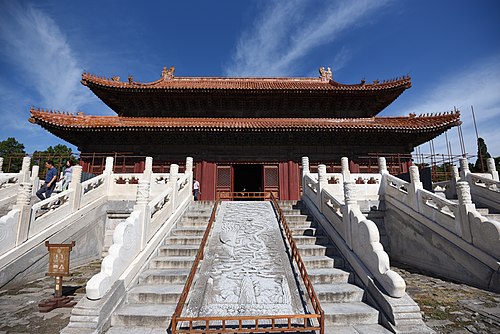
Tangshan is a major city located in Hebei province, China, situated approximately 150 kilometers east of Beijing. Known for its rich industrial heritage and significant historical events, Tangshan was initially established as a small village and evolved into an industrial hub in the 20th century, primarily due to its proximity to the Bohai Sea. The city played a vital role in China's coal mining, manufacturing, and later, its burgeoning ceramics industry. By the late 1970s, Tangshan became famous for its high-quality porcelain and tiles, leading to the establishment of numerous factories and businesses that still thrive today.
Tangshan is internationally recognized for surviving one of the most devastating earthquakes in history, which struck on July 28, 1976. The earthquake, registering 7.5 on the Richter scale, claimed the lives of an estimated 240,000 people and flattened much of the city. In the aftermath, Tangshan underwent extensive reconstruction, and the city's resilience became a point of national pride. Today, visitors can explore the Tangshan Earthquake Memorial Park, which commemorates the victims and showcases the city's journey of recovery and rebirth. The city's modern skyline reflects rapid urbanization and development, with new infrastructure, shopping centers, and cultural institutions emerging in the years since its reconstruction.
In addition to its industrial significance, Tangshan has developed into a cultural center. The city hosts various cultural festivals and events, including traditional opera, dance, and art exhibitions that celebrate both its heritage and modern influences. The Tangshan Cultural Center and various museums provide insights into the city's past while promoting contemporary artistic endeavors. Notably, Tangshan is also famous for its nearby natural attractions, such as the Tangshan Nanhu Eco-city Central Park, which offers recreational areas and green spaces that appeal to both residents and visitors. With a population exceeding 7 million people, Tangshan continues to evolve, balancing its industrial roots with a burgeoning urban lifestyle and a commitment to sustainable development.
Facts about Tangshan
- Tangshan is known as the 'Earthquake City' due to the devastating earthquake that struck on July 28, 1976, which resulted in over 240,000 fatalities and is considered one of the deadliest earthquakes in history.
- The city is famous for its porcelain production and is often referred to as the 'Porcelain Capital' of China, with a history of ceramic production dating back over 2,000 years.
- Tangshan has a unique Tangshan Earthquake Memorial Park, which commemorates the victims of the 1976 earthquake and serves as a historical site for education and remembrance.
- The Tangshan train station, reconstructed after the earthquake, is an architectural marvel that integrates modern design with cultural elements and serves as a major transportation hub in northern China.
- Tangshan has developed a strong industrial base, particularly in steel production and manufacturing, making it one of the significant industrial cities in northern China.
- The city's modern development includes the Tangshan International Convention and Exhibition Center, which hosts major events and contributes to its status as a business hub.
- In 2008, Tangshan was the host city for the Tangshan International Marathon, showcasing the city's vibrant culture and commitment to international sporting events.
- The city is also notable for its Tangshan Earthquake Memorial Museum, which exhibits historical information and artifacts related to the earthquake, educating visitors about the disaster.
- Tangshan's urban layout features a blend of modern architecture and traditional Chinese elements, a result of its rebuilding efforts following the earthquake, setting it apart from many other cities.
- As of recent years, Tangshan has established itself as a center for renewable energy, particularly focusing on wind and solar energy production, reflecting China's push towards green technology.