Targovishte, Bulgaria
- 34,793 people
- 10 places to visit
- 43.2494, 26.5727
Places to Visit (10)
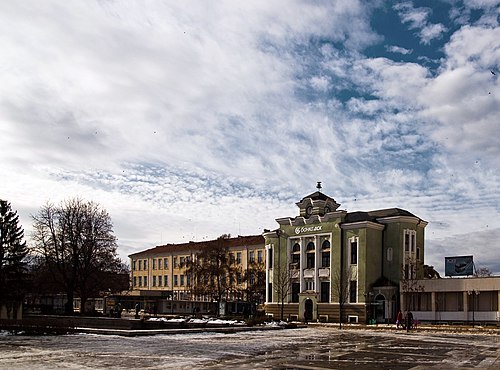
Targovishte is a city situated in northeastern Bulgaria and serves as the administrative center of Targovishte Province. With a population of approximately 33,000 residents, it is one of the smaller urban centers in Bulgaria, but it holds significant historical and cultural importance. The city's name translates to "marketplace," reflecting its historical role as a commercial hub. Targovishte has ancient roots, with archaeological findings suggesting that it has been inhabited since the Neolithic period. Throughout its history, it has been influenced by various cultures and empires, including the Thracians, Romans, and Ottomans, each leaving a mark on the local architecture and cultural landscape.
Among Targovishte’s notable landmarks is the Regional Historical Museum, which houses a collection of artifacts that spans thousands of years, illustrating the evolution of the region from prehistoric times to the modern era. The city is also known for its well-preserved traditional architecture, particularly from the National Revival period, which can be seen in the surrounding villages and neighborhoods. In addition to its rich history, Targovishte is an agricultural center thanks to the fertile lands that characterize the region. The local economy historically flourished due to the production of grains, fruits, and vegetables, alongside other industries such as textiles and food processing.
Cultural events and festivals play a significant role in the civic life of Targovishte, fostering community spirit and attracting visitors to the area. The city celebrates various ethnographic and folklore events that showcase the traditions, music, and crafts of the region. Targovishte's location in northeastern Bulgaria provides easy access to natural attractions, including the nearby Uzana area and the beautiful Balkan Mountains, which offer ample opportunities for outdoor activities such as hiking and cycling. Overall, Targovishte presents a blend of historical, cultural, and natural features, making it an intriguing destination in Bulgaria.
Facts about Targovishte
- Targovishte is known for its rich history dating back to ancient Thracian settlements and has archeological findings from various periods, including Roman and medieval artifacts.
- The city of Targovishte was an important trade center during the Ottoman Empire, which is reflected in its name that translates to 'market place' in Bulgarian.
- Targovishte hosts the 'Byala Cherkva' Monastery, established in the 12th century, which is notable for its beautiful frescoes and historical significance.
- The town is home to the renowned 'Targovishte Fair', which is one of the oldest and most significant fairs in Bulgaria, promoting local craftsmanship and agriculture.
- Targovishte has a unique independence movement history; in 1878, it was one of the sites that contributed to the struggle for national liberation from Ottoman rule.
- The city is famous for the traditional Bulgarian folk festival 'Sveti Georgi' (St. George's Day), which features local music, dances, and crafts, attracting visitors from across the region.
- Targovishte is known for its picturesque natural surroundings, including the nearby 'Sinite Kamani' nature reserve, which boasts diverse wildlife and hiking opportunities.
- Educationally, Targovishte is distinguished for its strong emphasis on culture and arts, hosting various music and art events throughout the year.
- The city plays a significant role in Bulgaria's textile industry, housing numerous manufacturing facilities and craft businesses that contribute to the local economy.
- Targovishte has a unique architectural blend, with structures from the Ottoman era coexisting with socialist-era buildings, showcasing the city's diverse historical influences.