Tashkent, Uzbekistan
- 1,978,028 people
- 13 places to visit
- 41.2995, 69.2401
Places to Visit (13)
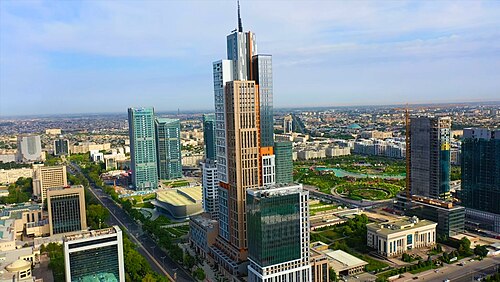
Tashkent, the capital city of Uzbekistan, is one of Central Asia's largest urban centers, blending rich history with modern development. As the political, economic, and cultural heart of the country, Tashkent has undergone significant transformation since its independence from the Soviet Union in 1991. The city is strategically located along the historic Silk Road, which contributed to its emergence as a vital trade hub for centuries. Tashkent boasts a diverse architectural landscape that includes ancient mosques, mausoleums, and Soviet-era structures, along with contemporary buildings that reflect the aspirations of a nation in transition.
The city is home to several notable landmarks, including the Khast Imam Complex, which contains the oldest Quran in existence, and the major squares such as Independence Square and Amir Timur Square, which celebrate Uzbekistan’s heritage and national identity. Tashkent's extensive public transport system, including the metro, is known for its intricately designed stations inspired by various cultural themes. As a cultural hub, Tashkent hosts numerous museums, theaters, and art galleries that celebrate the country's rich history and vibrant arts scene. Additionally, Tashkent plays a significant role in education and research, with institutions such as the National University of Uzbekistan contributing to the country's intellectual landscape.
In recent years, Tashkent has furthered its modernization efforts, promoting economic growth and attracting foreign investment. The city's population, which exceeds 2.5 million, is a melting pot of ethnicities, contributing to its vibrant social fabric. Tashkent’s markets, such as Chorsu Bazaar, offer an authentic taste of Uzbek culture, showcasing an array of local produce, culinary delights, and traditional crafts. As Uzbekistan continues to open its doors to the world, Tashkent remains a focal point for understanding the country’s past, present, and future, serving as a testament to its resilience and progressive spirit.
Facts about Tashkent
- Tashkent is the capital and largest city of Uzbekistan, serving as the political, economic, and cultural center of the country.
- The city has a rich history, with its origins dating back over 2,000 years, making it one of the oldest continuously inhabited cities in Central Asia.
- Tashkent is home to the Khast Imam Complex, which houses one of the oldest known copies of the Quran, believed to date back to the 7th century.
- The city features the Tashkent Metro, which is the first metro system in Central Asia and is known for its ornate and beautifully designed stations.
- Tashkent experienced significant reconstruction after a devastating earthquake in 1966, leading to modern architecture while preserving historical sites.
- The city is famous for its significant Silk Road heritage and was a vital trading post on the route connecting China and Europe.
- Tashkent's major green spaces, such as the Botanical Garden and the Parks of Alisher Navoi, set it apart as a city with a strong emphasis on nature and leisure.
- The city hosts numerous cultural events, such as the Tashkent International Film Festival, attracting filmmakers and artists from around the world.
- Tashkent is recognized for its diverse architectural styles, including Soviet-era buildings, Islamic architecture, and modern constructions, showcasing its historical evolution.
- As of recent years, Tashkent has seen a surge in tourism and economic development, making it a significant hub for international business and cultural exchange in Central Asia.