Teresina, Brazil
- 871,126 people
- 17 places to visit
- -5.0961, -42.8023
Places to Visit (17)
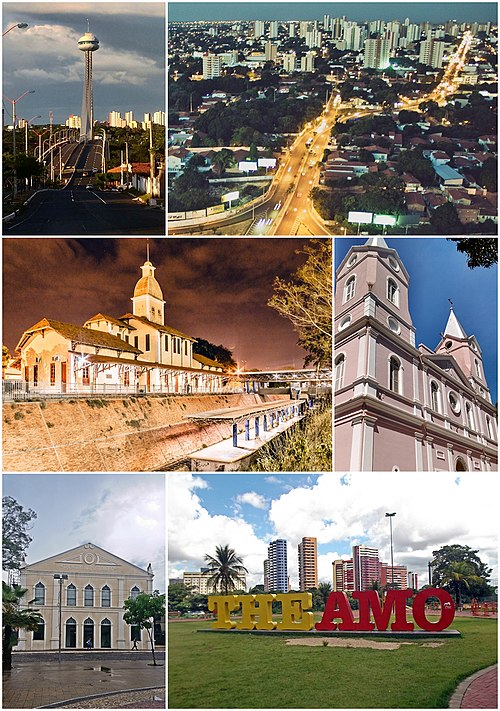
Teresina is the capital of the state of Piauí, located in the northeastern region of Brazil. Founded on August 16, 1852, it was named in honor of Empress Teresa Cristina of Brazil. The city lies at the confluence of the Poti and Parnaíba Rivers, approximately 1,500 kilometers from Brasília and about 350 kilometers from the Atlantic Ocean. Teresina occupies a strategic position as it serves as a hub for trade and commerce within the semi-arid Sertão region, linking the states to the north and south of Brazil. The city experiences a tropical climate characterized by a dry season from May to November and a rainy season from December to April, which markedly influences its cultural and agricultural practices.
As of the latest census, Teresina has a population of over 800,000 inhabitants, making it one of the largest cities in the Northeast. The city is known for its rich cultural scene, vibrant local cuisine, and historical architecture, featuring structures such as the Palácio de Karnak, the Teatro 4 de Setembro, and various churches that reflect its colonial past. In addition to its cultural significance, Teresina is an educational center, housing institutions like the Federal University of Piauí and the State University of Piauí. Economic activities in the city are diverse, ranging from agriculture and livestock to commerce and services. The proximity to fertile lands allows for the cultivation of crops such as rice and beans, while small industries contribute to local employment.
Teresina also serves as a base for exploring the natural attractions of Piauí, including national parks and unique geological formations such as the Parque Nacional da Serra da Capivara, recognized for its prehistoric rock paintings. The city hosts various cultural events, particularly during the Festas Juninas in June, which celebrates local traditions with music, dance, and seasonal foods. Despite facing challenges common to many urban centers, such as infrastructure development and social inequalities, Teresina remains a city of resilience and growth, embodying the spirit of northeastern Brazil.
Facts about Teresina
- Teresina is the capital of Piauí state and was founded on August 16, 1852, making it one of the younger capitals in Brazil.
- It is known for being the only capital in the Northeast region of Brazil that is not located on the coast.
- Teresina has a unique climate characterized by a pronounced dry season, with average annual rainfall being significantly lower than most other cities in Brazil.
- The city is renowned for its green areas, particularly the Parque Ambiental Encontro dos Rios, which celebrates the confluence of the Poti and Parnaíba rivers.
- Teresina is home to the famous Theatro 4 de Setembro, a neoclassical theater that hosts numerous cultural events and was inaugurated in 1893.
- The city boasts the first shopping mall in the Northeast, Shopping Rio Poty, which opened in 1983.
- Teresina is recognized for its vibrant culinary scene, particularly known for dishes such as 'carne de sol' and 'baião de dois', showcasing local ingredients.
- It hosts the annual Festival de Inverno de Teresina, a winter festival featuring music, dance, and traditional food, attracting tourists from across the country.
- The city has significant historical architecture, including the Praça da Bandeira, which features the impressive Igreja São Benedito, known for its baroque style.
- Teresina is often referred to as the 'Cidade Verde' (Green City) due to its many parks and trees, setting it apart from other urban centers in Brazil.