Thānesar, India
- 138,279 people
- 9 places to visit
- 29.9699, 76.8193
Places to Visit (9)
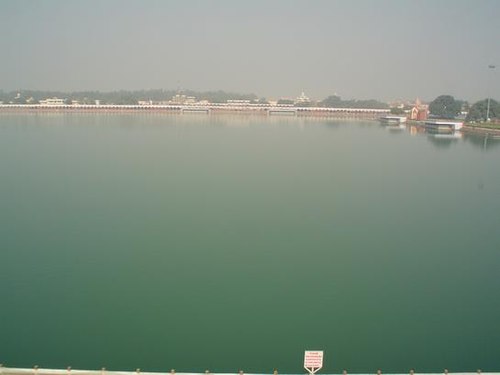
Thānesar is a historically significant town located in the Kurukshetra district of Haryana, India. It is situated about 8 kilometers to the north of the city of Kurukshetra, which is renowned for its association with the epic Mahabharata and the sacred text, the Bhagavad Gita. Thānesar is of considerable religious importance, being home to a number of temples and historical sites that attract pilgrims and tourists alike. Among its most famous landmarks is the Brahma Sarovar, a holy water tank believed to have purifying properties, which plays a crucial role in Hindu rituals and gatherings. The town is also known for its ancient temples, such as the Bhadrakali Temple and the Sthaneshwar Mahadev Temple, dedicated to Lord Shiva, which adds to its spiritual significance.
The history of Thānesar dates back to ancient times, where it was known as "Sthaneshwar," named after the deity Sthaneshwar, who is another form of Lord Shiva. The town's historical legacy includes being a prominent site during the time of the Mauryan and Gupta empires. Archaeological evidence suggests that Thānesar has been a region of settlement for thousands of years, with references in various ancient texts. The town was an important center of learning and culture during the medieval period, featuring a thriving community of scholars and artists. Today, Thānesar stands as a blend of history and modernity, with a growing economy primarily based on agriculture, trade, and religious tourism. Its proximity to Kurukshetra enhances its relevance, making it a pivotal part of the cultural and religious landscape of northern India.
Facts about Thānesar
- Thānesar is an ancient city in Haryana, India, known for its historical significance and as a pilgrimage site for Hindus, particularly for the legacy of the Mahabharata.
- The city is home to the ancient temple complex of Shiv Kund, a revered site believed to be associated with Lord Shiva and significant in Hindu mythology.
- Thānesar was historically part of the region known as 'Kurukshetra' during the Mahabharata period, enhancing its cultural and religious importance.
- The archaeological site of 'Jyotisar', located near Thānesar, is traditionally recognized as the birthplace of the Bhagavad Gita, adding to the spiritual heritage of the city.
- Thānesar is known for its unique architectural blend, featuring temples that showcase Nagara style architecture and intricate stone carvings.
- The city features the historic Brahma Sarovar, which is a large water tank believed to have been constructed during the reign of the Vedic period, and attracts pilgrims especially during solar eclipses.
- Thānesar is closely linked to Guru Dronacharya, the revered teacher of the Pandavas and Kauravas in the Mahabharata, emphasized in many local legends and folklore.
- The town hosts the annual 'Sannihit Sarovar Mela', a fair that attracts thousands of devotees who come to take ritual baths and participate in religious festivities.
- Thānesar also serves as a significant educational hub with institutions dedicated to preserving the cultural heritage and teaching traditional Indian arts.
- The city is prominently connected to the Kalesar National Park, which is a biodiversity hotspot, featuring rich flora and fauna unique to the region.