Thívai, Greece
- 36,477 people
- 3 places to visit
- 38.3226, 23.3204
Places to Visit (3)
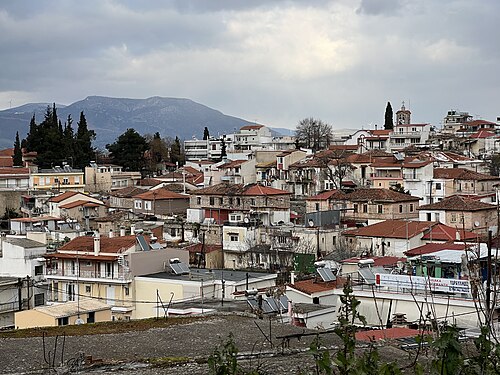
Thívai, also known as Thebes, is a historic city located in Boeotia, Greece. Situated approximately 50 kilometers northwest of Athens, Thívai is notable for its rich archaeological heritage and its significance in ancient Greek history. The city is often associated with the legendary hero Heracles and is mentioned in various Greek myths and classic texts. The modern municipality of Thívai, as it is known today, serves as a hub for the surrounding agricultural region, benefiting from fertile plains conducive to farming.
Thívai's historical roots can be traced back to ancient times, making it one of the oldest inhabited cities in Europe. In antiquity, it emerged as a prominent city-state and a rival of Athens and Sparta. Thebes played a crucial role in several key historical events, particularly during the Classical period, when it became a major military power under leaders like Epaminondas. The city's most famous military victory occurred at the Battle of Leuctra in 371 BC, where Theban forces defeated the Spartans, significantly shifting the balance of power in Greece. Significant archaeological sites in the area, such as the ruins of the Cadmeia (the acropolis of Thebes) and the ancient theater, continue to attract scholars and tourists alike.
Today, Thívai is a blend of its rich historical past and modern Greek life. It has a population of around 15,000 people and features amenities typical of a contemporary town, including schools, shops, and cultural institutions. The local economy is largely based on agriculture, with the cultivation of crops such as olives, grapes, and cereals. Thívai hosts annual cultural events that celebrate its ancient heritage, drawing attention to local traditions while fostering a sense of community. The city's historical significance and its picturesque surrounding landscape make it an important destination for those interested in exploring Greece's classical legacy.
Facts about Thívai
- Thívai, also known as Thebes, is one of the oldest continuously inhabited cities in Europe, with a history dating back over 3,000 years.
- The city is famously associated with Greek mythology, being the birthplace of the legendary hero Hercules and the tragic figure Oedipus.
- Thívai was a significant center during the ancient Greek period, known for its powerful city-state and as a member of the Boeotian League.
- The remains of the Cadmea, the ancient citadel of Thíbais, feature well-preserved ruins that attract archaeologists and historians.
- The Thébais region is known for the Battle of Leuctra in 371 BC, where the Thebans defeated the Spartans, marking a turning point in Greek history.
- Thívai's archaeological museum houses artifacts from the ancient city, including pieces from the prehistoric period to the Roman era.
- The city has a unique geographical location situated near the fertile plain of Boiotia, making it historically important for agriculture.
- Thívai is often overlooked compared to more famous Greek sites, allowing for a quieter exploration of its rich historical legacy.
- The annual festival of Agios Georgios celebrates local traditions and connects the community through various cultural events.
- Thívai played a crucial role during the Greek War of Independence, serving as a significant battleground and a center for revolutionary activities.