Tianjin, China
- 11,090,314 people
- 12 places to visit
- 39.0851, 117.1994
Places to Visit (12)
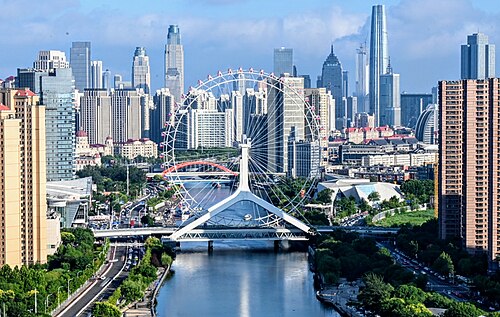
Tianjin is a major port city located in northern China, approximately 120 kilometers southeast of Beijing. With a population of over 15 million, it is one of the largest cities in the country and serves as a vital economic and cultural center. The city lies at the confluence of the Hai River and the Bohai Sea, making it a critical hub for maritime trade. Established as a treaty port in the 19th century, Tianjin played a significant role during the Opium Wars and has since developed into a modern metropolis, characterized by a blend of traditional Chinese architecture and European colonial styles. The influence of various foreign powers is evident in the city's diverse architectural landscape, particularly in the Tianjin Italian Style Town and the concessions along the Haihe River.
Tianjin's economy is robust and diverse, driven by industries such as manufacturing, finance, and logistics. It is home to one of the largest shipping ports in the world, the Tianjin Port, which facilitates extensive trade both domestically and internationally. The city is also a significant center for technology and innovation, with numerous universities and research institutions fostering development in various fields. Tianjin's transportation infrastructure is well-developed, featuring a comprehensive network of roads, railways, and an international airport, which contributes to its status as an important logistical hub for northern China. In addition to its economic significance, Tianjin is known for its cultural heritage, offering a vibrant arts scene, historic sites, and recreational activities along the riverfront, making it a destination for both tourists and locals alike.
The city's commitment to modernization and sustainable urban development is evident in its ongoing projects aimed at improving the living conditions of its residents while preserving its historical heritage. Through investment in public spaces and environmental initiatives, Tianjin strives to enhance the quality of life for its inhabitants and strengthen its position in the global economy. With its rich history, dynamic culture, and strategic location, Tianjin continues to be a key player in China's development and integration into the global community.
Facts about Tianjin
- Tianjin is one of the four municipalities directly under the Central Government of China, alongside Beijing, Shanghai, and Chongqing, making it a significant urban center.
- The city's history as a major port dates back to the Qing Dynasty, when it was opened to foreign trade in 1860, which led to a blend of cultures in its architecture and population.
- Tianjin is home to the Tianjin Eye, a giant Ferris wheel that is built over a bridge and offers stunning views of the city's skyline and the Haihe River.
- The city features 'Foreign Concessions' from the colonial era, where distinctive European-style architecture can be seen, particularly in the Italian and French Concessions.
- Tianjin Binhai International Airport is a hub for international travel and is essential as it connects the city to various global destinations, enhancing its status as a trade and transport center.
- Tianjin is known for its culinary specialties, particularly 'Goubuli Baozi' (stuffed buns) and 'Erduoyan Fried Rice,' reflecting its rich local food culture.
- The city hosts the Tianjin International Beer Festival annually, attracting visitors with events centered around beer tasting and local music.
- Tianjin has the world's third-largest library, the Tianjin Library, which aims to promote education and culture in the region.
- The city has a unique, extensive system of waterways that has earned it the nickname 'The Venice of the Orient' due to its picturesque bridges and canals.
- Tianjin was instrumental in modern Chinese history, serving as a base for the 1900 Boxer Rebellion and subsequent foreign legations, which played a significant role in the country's shift towards modernization.