Tiraspol, Moldova
- 157,000 people
- 15 places to visit
- 46.8482, 29.5968
Places to Visit (15)
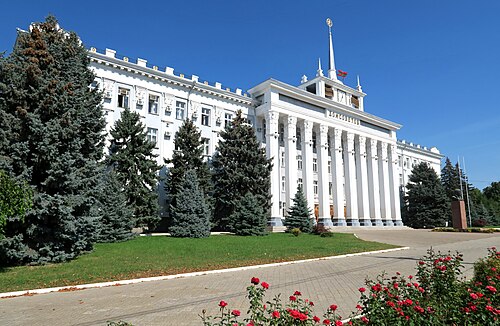
Tiraspol is the capital city of the breakaway territory of Transnistria, a self-proclaimed republic situated in the eastern region of Moldova, bordering Ukraine. Established in 1792 as a military post by the Russian Empire, Tiraspol has historically played a vital role in the region. It is located on the Dniester River, around 40 kilometers south of the Moldovan capital, Chișinău. The city's population is approximately 130,000 residents, predominantly ethnic Russians and Ukrainians, alongside a smaller community of Moldovans and other ethnic groups.
The city's architecture reflects its Soviet past, evident in several monumental structures and wide boulevards. Tiraspol is characterized by public squares, statues, and buildings that commemorate Soviet leaders. A notable landmark is the Supreme Soviet building, which houses the local government, as well as the iconic Monument to the Liberators that celebrates the Soviet victory in World War II. Despite its lack of international recognition, with most countries considering it part of Moldova, Tiraspol maintains its administrative structure and operates in a way akin to an independent state, issuing its own currency and passports. The local economy is based on a blend of industry, agriculture, and trade, with an emphasis on manufacturing and the production of goods common to Soviet-style economies.
Culturally, Tiraspol hosts a variety of institutions, including theaters, museums, and educational establishments. The city upholds traditions celebrated in both Moldovan and Russian culture, showcasing a unique blend that reflects its diverse ethnic makeup. Although Tiraspol exists in a politically complex environment, its residents maintain a distinct identity shaped by its history, culture, and the ongoing dynamics of regional politics. Visitors to Tiraspol often find a sense of the past preserved in its streets and societal structure, offering insights into a region that remains intricate and nuanced in its political standing.
Facts about Tiraspol
- Tiraspol is the capital of the unrecognized breakaway state of Transnistria, which lies within Moldova's borders.
- The city was founded in 1792 as a military outpost of the Russian Empire, making it one of the oldest cities in the region.
- Tiraspol features a prominent statue of Lenin, which is one of the few remaining such statues in the former Soviet republics, symbolizing its Soviet past.
- The city's architecture has many Soviet-era buildings, including government offices and monuments that reflect its historical significance during the USSR period.
- Tiraspol is home to the Transnistrian Republican Bank, which issues its own currency, the Transnistrian ruble, distinguishing it from the Moldovan leu used elsewhere in Moldova.
- The city hosts the annual Tiraspol International Marathon, encouraging sports and tourism in this relatively isolated area.
- Tiraspol has its own unique flag, which combines elements of both the Soviet-era designs and modern national identity of Transnistria.
- The Dniester River runs alongside Tiraspol, providing scenic views and recreational opportunities, as well as forming a natural boundary between Moldova and Ukraine.
- Tiraspol enjoys a blend of cultural influences, with a population that includes ethnic Russians, Ukrainians, and Moldovans, creating a diverse community and rich cultural tapestry.
- The city is noted for its 'Palace of the Soviets,' a grand building that stands as a reminder of its Soviet-era governance and central planning.