Tiruppur, India
- 963,173 people
- 7 places to visit
- 11.1085, 77.3411
Places to Visit (7)
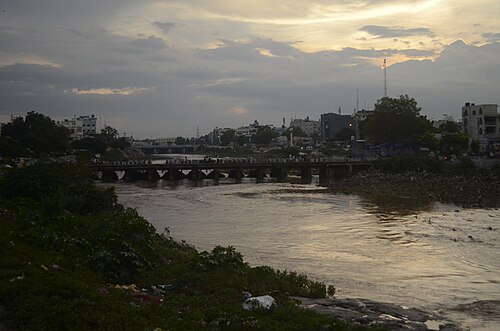
Tiruppur is a city located in the Indian state of Tamil Nadu, known for its significant role in the textile and garment industry. Situated approximately 50 kilometers from Coimbatore and 450 kilometers from the state capital, Chennai, Tiruppur lies on the banks of the Noyyal River. The city's population is estimated to be around 250,000, making it a bustling urban center. Tiruppur's economy has long been dominated by its textile factories, which specialize in the production of knitted garments. This sector has made the city a crucial hub for exports, with a substantial percentage of its products being sent to international markets, particularly in Europe and North America.
The growth of Tiruppur's textile industry can be traced back to the 1980s, when it began to emerge as a manufacturing base for knitwear. Over the years, it has evolved into one of the largest garment-exporting centers in India, earning it the nickname "Knit City." The availability of skilled labor, competitive pricing, and a well-established supply chain have contributed to the city’s prominence in this sector. Alongside textiles, other industries have also started to develop in Tiruppur, including processing units for agricultural products and small-scale manufacturing. Furthermore, the city has made strides in becoming more environmentally sustainable by adopting eco-friendly practices in its textile production.
In terms of infrastructure, Tiruppur is well-connected through road and rail networks, facilitating both domestic and international trade. The city's proximity to Coimbatore International Airport enhances its accessibility for business travelers and freight transport. Local education and healthcare facilities are also gradually improving, catering to the needs of its growing population. Tiruppur celebrates various cultural and religious festivals, reflecting the rich traditions of Tamil Nadu. Noteworthy among them are Pongal, a harvest festival, and Diwali, which are celebrated with much fervor. The convergence of industrial growth and cultural vibrancy positions Tiruppur as not only an economic powerhouse in the textile domain but also a city with a unique identity in the broader canvas of Tamil Nadu.
Facts about Tiruppur
- Tiruppur is known as the 'Knitwear Capital of India' due to its prominence in the production of cotton knitwear and hosiery.
- The city has a significant export market, accounting for more than half of India's total knitwear exports.
- Tiruppur hosts the annual Tiruppur Knit Fair, attracting buyers and manufacturers from across the globe to showcase the latest innovations and trends in knitwear.
- The city features the ancient Sri Kumaraswamy Temple, which is believed to date back to the 10th century and showcases Dravidian architectural style.
- Tiruppur has a unique weather pattern characterized by hot summers and moderate winters, making it an ideal region for textile manufacturing.
- The area is home to the Tiruppur District, which is one of the key economic hubs in Tamil Nadu, contributing significantly to the state's GDP.
- Tiruppur is notable for its well-established garment industry clusters, which facilitate a localized network of suppliers, manufacturers, and exporters.
- The city is also recognized for its commitment to sustainability, with many factories adopting eco-friendly practices and certifications like GOTS (Global Organic Textile Standard).
- Tiruppur has been the birthplace of several notable entrepreneurs and industry leaders who have shaped the Indian textile landscape.
- The city's strategic location, close to Coimbatore and major transportation hubs, further enhances its role as a logistics and distribution center in the textile sector.