Torreón, Mexico
- 735,340 people
- 16 places to visit
- 25.5428, -103.4068
Places to Visit (16)
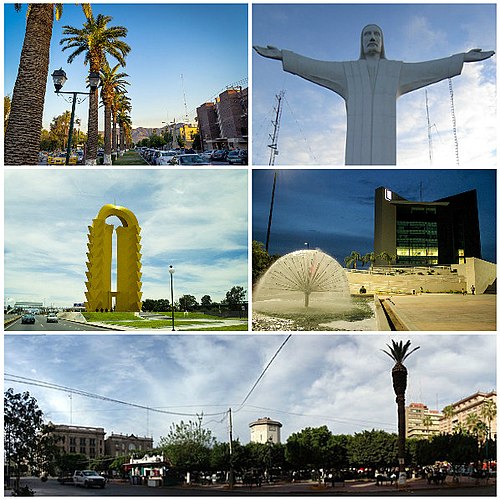
Torreón is a significant city located in the northern region of Mexico, specifically within the state of Coahuila. It sits at an elevation of approximately 1,200 meters (about 3,900 feet) above sea level and is part of the Laguna Region, which encompasses the cities of Gómez Palacio and Lerdo in the neighboring state of Durango. The city was founded in the 19th century, with its establishment being attributed to the arrival of the railroad in the late 1800s, which spurred industrial and agricultural development. Torreón has since grown into one of Mexico's important urban and industrial centers, contributing to the economy through its diverse industries, which include manufacturing, commerce, and agriculture.
The city's population has experienced significant growth over the years, making it one of the largest metropolitan areas in northern Mexico, with over half a million residents as of the most recent estimates. Torreón is characterized by its arid climate, which features hot summers and mild winters, suitable for activities like agriculture in nearby irrigated areas. The economy benefits from the production of cotton, fruit, and livestock, owing to its proximity to the fertile plains of the Comarca Lagunera. Additionally, Torreón boasts a rich cultural scene, highlighted by various festivals and a blend of modern and traditional Mexican influences, including notable architectural landmarks such as the Cristo de las Noas, a large statue of Christ overlooking the city.
Key to Torreón's identity is its historical significance, particularly its role during the Mexican Revolution and its development as a hub for immigrant communities, particularly from Europe, who contributed to the city's growth. As a result, Torreón presents a unique cultural tapestry with influences from different backgrounds. Today, the city is known for its educational institutions, such as the Autonomous University of Coahuila, and a vibrant cultural life that includes theaters, museums, and art galleries. This dynamic blend of industry, culture, and history makes Torreón an important city in Mexico's northern landscape.
Facts about Torreón
- Torreón is known as the 'Cultural Capital of the Laguna Region' in northern Mexico, highlighting its significance as a cultural hub.
- The city played a crucial role during the Mexican Revolution, particularly in the Battle of Torreón in 1914, which was a key conflict leading to the fall of the Carranza government.
- Torreón is home to the iconic Cristo de las Noas, a 22-meter tall statue of Christ that overlooks the city and is one of the tallest in the world.
- The city hosts the annual Festival Internacional de Cine de Torreón, which showcases independent films and promotes local and international cinema.
- Torreón is part of the Laguna region, which is known for its unique landscape of semi-desert and its significant agricultural production, particularly in cotton.
- The city has a rich industrial history, being known for its textile mills, which flourished in the early to mid-20th century, making it a major economic center.
- The Torreón Cathedral, built in the early 20th century, features a mix of architectural styles including Neoclassical and Gothic, setting it apart from traditional Mexican churches.
- Torreón has a population that is culturally diverse, with significant influences from both northern Mexican and American cultures due to its proximity to the U.S. border.
- The city is known for its role in the development of baseball in Mexico, hosting the famous Mexican baseball team, the Algodoneros de Torreón, which adds to the city's sports culture.
- Torreón is home to the Parque Fundadores, a park that includes the historical monument Monumento a la Revolución, commemorating the important events of the Mexican Revolution.