Tortona, Italy
- 22,743 people
- 8 places to visit
- 44.8952, 8.8633
Places to Visit (8)
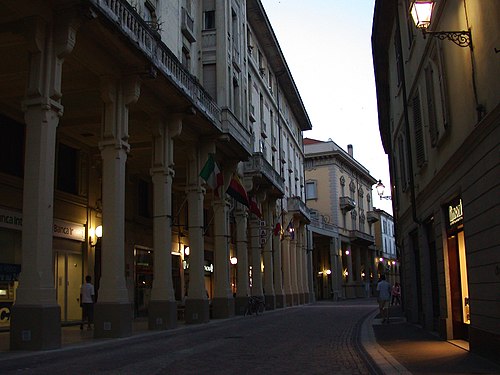
Tortona is a historic city located in the Piedmont region of northern Italy, specifically within the province of Alessandria. With a population of approximately 27,000 residents, it is nestled at the confluence of the Scrivia and Dero rivers and is situated about 80 kilometers southeast of Milan. Tortona boasts a rich history that dates back to ancient Roman times when it was known as Dertona. The city served as an important economic and strategic hub, benefitting from its favorable location along various trade routes. Remains of Roman structures, such as the amphitheater and the walls, can still be found today, attesting to its longstanding significance in regional history.
The city's architecture reflects its diverse historical influences, ranging from medieval to Renaissance styles. Key landmarks include the Cathedral of Santa Maria Assunta, which features a Baroque façade and a series of impressive artworks, as well as the 12th-century Basilica of San Matteo, which houses notable frescoes. In addition to its religious monuments, Tortona is famous for its palazzi, including the Palazzo Guidobono, which showcases elegant architectural designs. The city also has a vibrant cultural scene, hosting events and festivals that celebrate local traditions and crafts. One of the most notable events is the annual "Fiera di Tortona," a fair that emphasizes regional products and local cuisine, attracting visitors and promoting the area's agricultural heritage.
Economically, Tortona has evolved over the years, transitioning from its historical dependence on agriculture and trade to becoming a center of industrial activity, particularly in the fields of textiles, machinery, and food production. The city’s strategic location and well-developed transportation infrastructure, including its railway connections, have facilitated its growth as a commercial hub. In addition, Tortona is known for its role in the automotive industry, contributing significantly to Italy's reputation for quality manufacturing. The blend of rich history, cultural significance, and industrial growth makes Tortona an interesting and important city within the Italian landscape.
Facts about Tortona
- Tortona is known for its strategic location in the heart of the Piedmont region, making it a historical trade hub dating back to Roman times.
- The city is famous for its unique medieval architecture, particularly the Tortona Cathedral, which features a blend of Romanesque and Gothic styles.
- Tortona is home to the annual Fiera di San Marziano, a traditional fair that celebrates local products and culture, attracting visitors from all over the region.
- The city played a significant role during the Napoleonic Wars, serving as a supply center for the French Army and later becoming a garrison town.
- Tortona is the birthplace of several notable historical figures, including the Italian painter and architect Giovanni Battista Piranesi.
- The city's surrounding region is known for producing quality wines, including Barbera and Dolcetto, with numerous vineyards nearby.
- Tortona has a rich textile industry history, particularly in silk production, which dates back to medieval times and contributed to its economic growth.
- The remnants of the ancient Roman city of Derthona can still be explored in Tortona, showcasing the area's long and diverse history.
- Tortona hosts the annual 'Tortona Spring', an event that showcases local art, music, and gastronomy, promoting community engagement and cultural exchange.
- The city is a significant center for transportation, with major rail and road connections facilitating trade and travel within Italy and to neighboring countries.