Trani, Italy
- 53,981 people
- 10 places to visit
- 41.2766, 16.4199
Places to Visit (10)
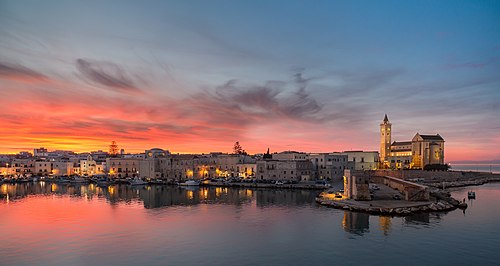
Trani is a picturesque coastal city located in the Apulia region of southern Italy, situated on the Adriatic Sea. Known for its rich history, Trani has roots that date back to antiquity, flourishing during the Roman Empire when it was a significant port town. The city’s strategic location made it an important commercial harbor, especially during the Middle Ages. One of its most notable landmarks is the Romanesque Cathedral of San Nicola Pellegrino, built in the 12th century. This stunning cathedral, with its impressive bell tower and beautiful position overlooking the sea, serves as a testament to the city’s architectural heritage and attracts many visitors each year. The cathedral, coupled with the historical Castello Svevo, built by Frederick II in the early 13th century, highlights Trani's significance during the Norman and Swabian periods.
Trani is also famous for its charming old town, a labyrinth of narrow streets lined with white limestone buildings, offering a blend of medieval and Baroque architecture. The lively waterfront is adorned with cafes, restaurants, and shops, providing an inviting atmosphere where locals and tourists alike can enjoy fresh seafood, particularly the region's famous dishes like "orecchiette" and local wines. The city's marina is a hub for fishermen, and the picturesque harbor frequently features colorful fishing boats bobbing in the water, showcasing the city’s long relationship with the sea. In addition to its culinary delights, Trani hosts several cultural events throughout the year, including festivals that celebrate its historical heritage and local traditions. With its captivating combination of history, architecture, and coastal beauty, Trani has become a popular destination for those seeking to explore the cultural gems of Italy’s Apulia region.
Facts about Trani
- Trani is renowned for its stunning Romanesque cathedral, Cattedrale di San Nicola Pellegrino, which is uniquely located right by the sea, making it one of the few cathedrals with such a prominent coastal position.
- The city has a rich history as an important medieval port and was a significant center for trade and maritime activities in the Apulia region during the 11th and 12th centuries.
- Trani's historic center is home to a well-preserved 13th-century castle, Castello Svevo, built by Frederick II, which offers insight into the city's medieval architecture and defensive strategies.
- The town is famous for its production of 'Vino di Trani', a local wine made primarily from the ancient grape variety 'Bombino Nero', distinctive for its unique flavor profile influenced by the region's climatic conditions.
- Trani hosts the annual 'Festa di San Nicola', celebrating its patron saint with processions and festivities, reflecting the city's deep-rooted religious traditions and communal spirit.
- The city's Jewish community was historically significant, and Trani had one of the oldest and most important Jewish quarters in Southern Italy, a testament to its multicultural past.
- Trani's beautiful seafront promenade, known as 'Lungomare', is a popular destination for both locals and tourists, offering picturesque views and a vibrant social scene, particularly in the evenings.
- The baroque Church of Ognissanti, built in the 18th century, is notable for its architectural elegance and intricate interior, setting it apart from other religious buildings in the region.
- Trani's marina is one of the few natural harbors in the region and serves as an important hub for fishing and recreational boating, adding to the city's maritime character.
- The town is also an emerging center for contemporary art and culture, hosting various art exhibitions and events that promote local artists and engage the community.