Tripoli, Libya
- 1,302,947 people
- 9 places to visit
- 32.8877, 13.1872
Places to Visit (9)
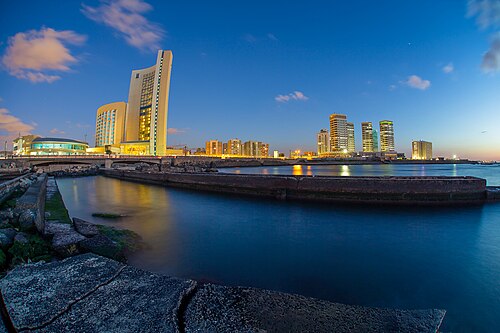
Tripoli, the capital of Libya, is situated in the northwest of the country along the Mediterranean coast. Founded by the Phoenicians in the 7th century BC, it has a rich history that spans various civilizations, including the Romans, Byzantines, and Ottomans. Today, Tripoli is the largest city in Libya, with a population of approximately 1.2 million residents, making it an important political, economic, and cultural center. The city's architecture reflects its diverse past, featuring a mix of Ottoman, Islamic, and Italian colonial influences. Prominent landmarks include the Red Castle (Assaraya al-Hamra), the Grand Mosque of Tripoli, and the historic Medina, where narrow alleys are lined with vibrant markets and traditional crafts.
Since the 2011 uprising that led to the ousting of long-time leader Muammar Gaddafi, Tripoli has experienced significant political turmoil and conflict. The city has been the center of power struggles among various factions and militias, affecting day-to-day life for its residents. Efforts to establish a stable government have faced numerous challenges, but recent years have seen some improvements in the security situation. Despite its struggles, Tripoli remains a crucial hub for the Libyan economy, with industries such as oil and gas, trade, and agriculture playing vital roles. Additionally, its strategic location along the Mediterranean makes it an important port city. The resilience of its people and their strong cultural identity continue to shape Tripoli's future as the city navigates the complex landscape of post-revolution Libya.
Facts about Tripoli
- Tripoli is the capital and largest city of Libya, serving as the political, economic, and administrative center of the country.
- The city has a rich history, with its roots dating back to the 7th century BC, and it was known as Oea, one of the three cities of the ancient region of Tripolitania.
- Tripoli is home to the famous Red Castle (Assai al-Hamra), a historic fortress that dates back to the 16th century and is a UNESCO World Heritage Site.
- The city's medina is a maze of narrow streets and alleys, featuring traditional souks (markets), mosques, and vibrant local culture unique to Tripoli.
- The Arch of Marcus Aurelius, built in 163 AD, stands as one of Tripoli's key historical landmarks and reflects the city's Roman legacy.
- Tripoli hosts the second largest airport in Libya, Mitiga International Airport, which operates both domestic and international flights.
- The city played a significant role in the Barbary Wars in the early 19th century, marking it as a crucial maritime hub during that period.
- Tripoli is known for its diverse architecture, including Ottoman-era buildings, colonial-era structures, and modern designs that coexist throughout the city.
- The city's population is predominantly Arab, with a mixture of Berber, Italian, and other communities contributing to Tripoli's multicultural identity.
- Tripoli has a vibrant arts scene, showcasing traditional Libyan music, poetry, and clothing, distinguishing it from other cities in Libya.