Trnava, Slovakia
- 63,194 people
- 15 places to visit
- 48.3709, 17.5833
Places to Visit (15)
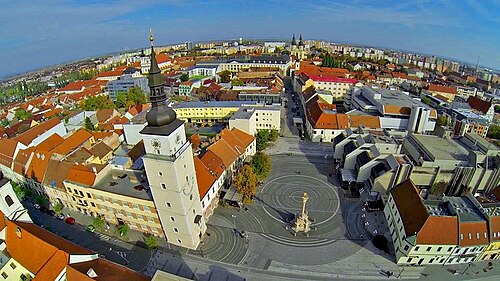
Trnava is a historic city located in western Slovakia, approximately 50 kilometers northeast of the capital, Bratislava. Known as the "Rome of Slovakia" due to its numerous churches, Trnava is one of the oldest cities in the country, with a rich history that dates back to the 13th century when it received town privileges. The city played a significant role during the Middle Ages, becoming a key administrative and cultural center. Notably, it was the seat of the archbishopric from 1541 until the wcapital was moved to Bratislava, further cementing its religious importance. Trnava’s well-preserved medieval architecture and vibrant cultural scene attract visitors year-round.
The city's landscape is characterized by a mix of baroque and gothic style buildings, with a number of significant landmarks. The St. Nicholas Basilica, with its impressive bell tower, is a focal point of the city and exemplifies the blend of artistic styles found throughout Trnava. The city’s historical core features the Church of St. John the Baptist, as well as the Slovak National Theatre's Satirical Theatre, contributing to Trnava’s cultural vibrancy. In recent years, the city has seen urban development that coexists with the preservation of its historical ambiance. Trnava offers a variety of events and festivals, enhancing its reputation as a cultural hub. Educationally, it is home to Trnava University, which adds to the youthful energy of the city. The combination of history, architecture, and contemporary development makes Trnava a unique destination within Slovakia, reflecting both the past and the modern spirit of Central Europe.
Facts about Trnava
- Trnava is known as the 'Rome of Slovakia' due to its numerous churches and ecclesiastical heritage, particularly its many Gothic and Baroque buildings.
- It was the first town in Slovakia to acquire the title of 'Royal Free Town' in 1238, granting it significant autonomy and privileges.
- Trnava is home to the University of Trnava, founded in 1635, which is one of the oldest universities in Slovakia and Central Europe.
- The city has one of the best-preserved medieval town walls in Slovakia, featuring four original gates that still stand today.
- Trnava hosts the annual Trnava Music Festival, celebrating classical and contemporary music, making it a cultural hub in the region.
- The historic center of Trnava is a UNESCO World Heritage Site candidate, highlighting its architectural significance and historical value.
- Trnava is also home to the impressive St. Nicholas Cathedral, a significant landmark reflecting the city's ecclesiastical importance.
- The city is notable for its Baroque architecture, such as the Church of St. Helen, which showcases intricate artistic designs.
- Trnava has a rich Jewish history, with a former Jewish community that contributed significantly to the city's culture and economy.
- It is strategically located between Vienna and Budapest, making it an important trade and cultural crossroads in Central Europe.