Trujillo, Peru
- 919,899 people
- 14 places to visit
- -8.1158, -79.0257
Places to Visit (14)
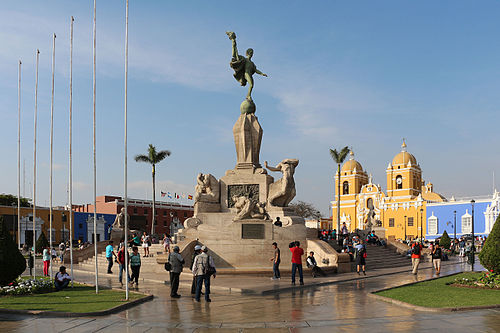
Trujillo is a vibrant city located on the northern coast of Peru, known for its rich history, cultural heritage, and economic significance. It is the capital of the La Libertad Region and has a population of approximately 300,000 residents. Founded in 1534 by Spanish conquistador Francisco Pizarro, Trujillo is often referred to as "La Ciudad de la Eterna Primavera" or "The City of Eternal Spring" due to its pleasant climate characterized by mild temperatures and minimal rainfall. This favorable climate has contributed to the city’s agricultural prosperity, particularly in the production of sugarcane and various tropical crops.
Culturally, Trujillo is renowned for its colonial architecture, with well-preserved structures that reflect its historical significance. The city is home to several important landmarks, including the Plaza de Armas, the neo-classical cathedral, and the impressive Trujillo Castle. Surrounding the city are significant archaeological sites, such as the ancient Moche and Chimú civilizations' ruins, with the Huacas del Sol y de la Luna being prominent examples. Trujillo also hosts the annual Marinera Festival, celebrating the traditional dance known as marinera, which showcases the region's lively culture and is a major draw for both locals and tourists.
Economically, Trujillo serves as a major commercial hub in northern Peru, benefiting from its proximity to the Pacific Ocean and its role as a center for agriculture, commerce, and industry. The city is strategically located near major highways connecting it to Lima and other key cities, facilitating trade and transport. As a result, Trujillo has seen substantial urban growth and development in recent years, with investments in infrastructure and services. This growth has been accompanied by a commitment to preserving its cultural heritage, making Trujillo a dynamic blend of historical richness and modern convenience, attracting both national and international visitors.
Facts about Trujillo
- Trujillo is known as the 'Capital of Culture of Peru' due to its rich history in arts and festivals.
- The city is home to the ancient Moche and Chimú civilizations, featuring significant archaeological sites such as the Huaca del Sol and Huaca de la Luna.
- Trujillo hosts the annual Marinera Festival, celebrating the traditional dance 'Marinera,' which is recognized as a national symbol of Peru.
- The city is famous for its colonial architecture, including the impressive Trujillo Cathedral, which showcases baroque and neoclassical styles.
- Trujillo is the birthplace of notable figures such as César Vallejo, a celebrated poet and one of the most important literary figures in Latin America.
- The region is renowned for its vibrant adobe brick structures, many of which date back to the colonial period, distinguishing Trujillo’s urban landscape.
- Trujillo is also known for the nearby coastal town of Huanchaco, famous for its traditional reed boats called 'caballitos de totora' used by local fishermen.
- The city's historical importance is underscored by the Battle of Trujillo in 1820, a key event in the Peruvian War of Independence.
- Trujillo boasts a diverse gastronomy, famous for dishes like 'cabrito' (young goat) and 'sec eco' (a regional stew), setting it apart from other culinary regions in Peru.
- The region is a significant center for the production of agriculture, especially in growing asparagus and sugarcane, contributing to Peru’s economy.