Tsukuba, Japan
- 175,589 people
- 3 places to visit
- 36.2, 140.1
Places to Visit (3)
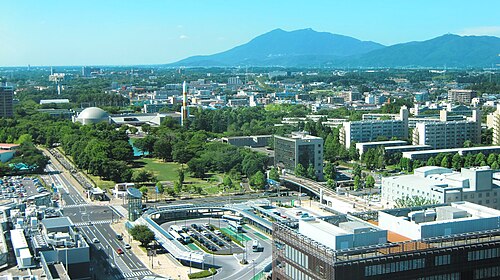
Tsukuba is a city located in Ibaraki Prefecture, Japan, approximately 50 kilometers northeast of Tokyo. Known primarily for its rich academic and research environment, Tsukuba is often referred to as Japan's "science city." The city was established in 1970 as part of a government initiative to promote scientific research and development, leading to the establishment of numerous research institutes and universities. One of the most prominent institutions in Tsukuba is the University of Tsukuba, known for its innovative educational approaches and strong emphasis on research across various fields including science, technology, and health. This educational legacy is complemented by several national research organizations, including the National Institute of Advanced Industrial Science and Technology (AIST) and the Space Robotics Laboratory.
The urban landscape of Tsukuba features a blend of modern architecture and open green spaces, promoting a high quality of life for its residents. Notably, the city is designed with wide roads and pedestrian-friendly pathways, fostering an environment conducive to cycling and outdoor activities. In addition to its academic reputation, Tsukuba is home to the Tsukuba Expo Center, which showcases educational science exhibits and aquariums, thereby attracting both locals and tourists. The city also hosts various annual events, including the Tsukuba International Science Festival, which celebrates innovation and scientific discovery, further cementing its status as a hub for scientific engagement. Overall, Tsukuba represents a unique intersection of education, research, and community, making it a significant player in Japan’s landscape of science and technology.
Facts about Tsukuba
- Tsukuba is home to the Tsukuba Science City, a hub for scientific research and innovation that hosts numerous research institutions and universities.
- The city is known for the Tsukuba Space Center, where Japan's space programs are developed and managed, including the JAXA (Japan Aerospace Exploration Agency).
- Tsukuba was officially designated as a city in 1971, making it a relatively young city compared to many others in Japan.
- The city is famous for the University of Tsukuba, which is one of the top universities in Japan, particularly known for its research in various scientific fields.
- Tsukuba hosts the annual Tsukuba International Science Festival, celebrating science and technology with exhibits, demonstrations, and activities for the public.
- The Tsukuba Expo '85 was an international exposition that showcased Japan's advancements in science and technology, attracting millions of visitors.
- Tsukuba is unique for its accessibility; it is only about 45 minutes away from Tokyo by train and features a well-planned transport system with its own dedicated expressway.
- The city is characterized by its extensive network of cycling paths and is often referred to as a 'bicycle-friendly' city, promoting eco-friendly transportation.
- Tsukuba's landscape is dominated by Mount Tsukuba, a significant cultural landmark that is considered one of Japan's 'famous mountains' and a popular hiking destination.
- The city's commitment to sustainable development is evident in its various environmental initiatives, making it a model for cities aiming to implement green technologies.