Tübingen, Germany
- 83,416 people
- 15 places to visit
- 48.5216, 9.0576
Places to Visit (15)
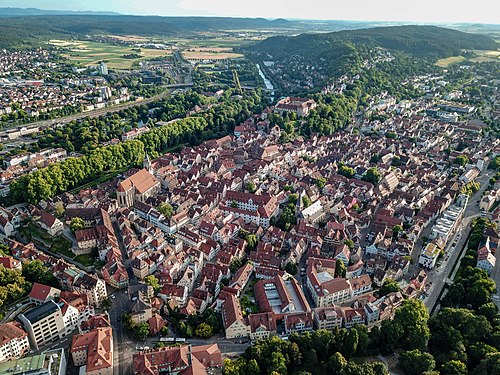
Tübingen is a picturesque university town located in the Baden-Württemberg region of southwestern Germany. The city lies along the banks of the Neckar River, surrounded by a landscape of rolling hills and vineyards, which contribute to its charm. With a population of approximately 90,000 residents, Tübingen is known for its vibrant intellectual atmosphere, largely shaped by the presence of one of Germany's oldest universities, Eberhard Karls Universität Tübingen, established in 1477. This prominent institution of higher learning attracts students from around the globe, enriching the city's cultural scene and fostering a diverse community.
The town is characterized by its well-preserved medieval architecture, including narrow cobblestone streets and timber-framed buildings that date back several centuries. Notable landmarks include the imposing Hohentübingen Castle, perched on a hill overlooking the city, which offers stunning views of the surrounding area. The castle, originally built in the 11th century, now houses a museum showcasing regional history. The Old Town (Altstad) is a major draw for visitors, featuring the charming Market Square (Marktplatz) where regular markets and various cultural events take place. Tübingen's vibrant cultural offerings are further highlighted by numerous theaters, galleries, and music festivals, making it a hub for arts and culture in the region.
In addition to its academic significance, Tübingen is known for its commitment to sustainability and environmental stewardship. The city has implemented various green initiatives aimed at promoting eco-friendly practices, including extensive bike paths and public transport options that encourage residents and visitors to reduce their carbon footprint. The surrounding countryside provides ample opportunities for outdoor activities, such as hiking and cycling, appealing to both locals and tourists. With its mix of historical significance, academic prestige, and a focus on sustainability, Tübingen remains a unique and inviting destination in Germany.
Facts about Tübingen
- Tübingen is home to one of the oldest universities in Germany, Eberhard Karls Universität Tübingen, founded in 1477.
- The city is famous for its picturesque medieval old town, featuring narrow streets, half-timbered houses, and the iconic Neckar River, which is popular for punting.
- Tübingen has a notable history of philosophical and literary contributions, being associated with thinkers like Hegel and Hölderlin.
- The Hölderlinturm, a tower in Tübingen, is where the poet Friedrich Hölderlin lived for several years, making it a significant literary site.
- Every summer, Tübingen hosts the 'Tübingen fair', a historic market event that has been taking place since the 15th century.
- The city is known for its vibrant student life, with students making up a significant portion of the population, bringing a youthful energy to the city.
- Tübingen is recognized for its commitment to sustainability and environmental efforts, often referred to as a model city for ecological development in Germany.
- The city has a unique botanical garden affiliated with the university, which boasts an impressive collection of plants from around the world.
- Tübingen's unique trilobite fossils can be found in the surrounding area, attracting paleontologists and natural science enthusiasts.
- The city organizes the Tübinger Burgertage, a medieval festival that celebrates its history with traditional crafts, music, and jousting.