Tunja, Colombia
- 172,548 people
- 7 places to visit
- 5.5446, -73.3576
Places to Visit (7)
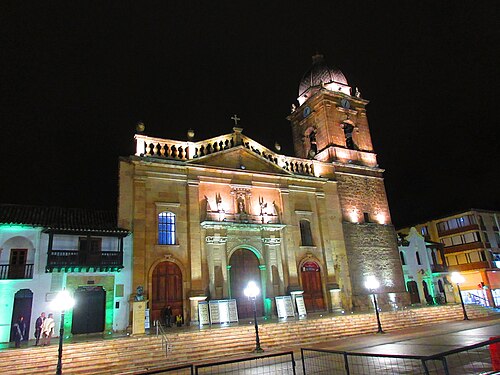
Tunja, the capital city of the Boyacá department in Colombia, is located in the Eastern Andes at an elevation of approximately 2,800 meters (9,186 feet) above sea level. Established in 1539, it is one of the oldest cities in the country and has preserved many elements of its rich colonial heritage. The city is historically significant, serving as a crucial center during the Spanish conquest and later as an important location for the independence movement. Tunja's strategic position on the Altiplano Cundiboyacense has made it a vital trade and transportation hub throughout its history.
The city is known for its remarkable architecture and historical landmarks, including the impressive Cathedral Basilica Metropolitana Metropolitana Metropolitana de Tunja, which dates back to the 16th century and showcases a blend of Gothic and Baroque styles. Another notable site is Puente de Boyacá, a symbolic bridge where the decisive battle for Colombia's independence was fought in 1819. This landmark is part of a national park that attracts both history buffs and nature enthusiasts. Additionally, Tunja features numerous plazas, churches, and museums that reflect its colonial past, alongside a vibrant local culture characterized by traditional festivals and artisanal crafts.
Tunja is not only rich in history but also serves as a cultural and educational center in Colombia. The city is home to several universities and institutions that draw students from various regions. Its climate, characterized by cool temperatures and frequent rains, supports agricultural activities, particularly the cultivation of potatoes and other crops. The surrounding area offers stunning landscapes, including the nearby Chicamocha Canyon, which provides opportunities for outdoor activities such as hiking and paragliding. With its blend of historical significance, cultural wealth, and natural beauty, Tunja continues to attract visitors interested in exploring the depth of Colombia's heritage and landscapes.
Facts about Tunja
- Tunja is the capital of the Boyacá department and is one of the oldest cities in Colombia, founded in 1539.
- The city is known for its rich history, being a significant site during the Spanish conquest and the War of Independence.
- Tunja is home to the famous Puente de Boyacá, a historic bridge that was the site of the pivotal Battle of Boyacá in 1819, which led to Colombian independence.
- The Catedral Basílica Metropolitana Metropolitana Metropolitana de Tunja is one of the oldest cathedrals in the country, built in the 16th century, and is located in the main square Plaza de de Banderas.
- Tunja has an impressive collection of colonial architecture, including Santa Clara Monastery and several churches, showcasing the influence of Spanish architecture.
- The city is recognized for its archaeological sites, including the Sun Temple (Templo del Sol) of the Muisca civilization, reflecting its rich pre-Columbian history.
- Tunja hosts the Festival of the Andean Culture every June, celebrating traditional music, dance, and local cuisine, distinguishing it as a center of cultural heritage.
- It is also known for its high altitude, situated at approximately 2,800 meters (9,186 feet) above sea level, making it one of the highest cities in Colombia.
- Tunja is recognized as a center for education, with numerous universities and institutions, thus making it a hub for academic and cultural exchange in the region.
- The city has a vibrant local market scene, especially the Plaza de Mercado, showcasing traditional Boyacense food and handicrafts that reflect its cultural identity.