Ujjain, India
- 457,346 people
- 14 places to visit
- 23.1765, 75.7885
Places to Visit (14)
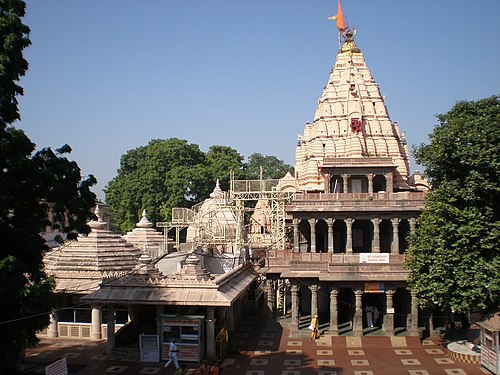
Ujjain, a prominent city in the Indian state of Madhya Pradesh, is renowned for its historical significance and spiritual heritage. Situated on the banks of the sacred Shipra River, Ujjain is one of the seven Mukti Sthal (places of liberation) in Hindu belief. The city has been a center of learning and spirituality for centuries, with references dating back to ancient texts, including the Rigveda and the Mahabharata. Ujjain is best known for the Kumbh Mela, a significant religious event that attracts millions of devotees and pilgrims every 12 years, where participants gather to bathe in the holy river for spiritual purification.
The city is home to several famous temples, with the Mahakaleshwar Jyotirlinga, one of the twelve revered Jyotirlingas dedicated to Lord Shiva, being the most significant. The temple is a prime pilgrimage site, drawing thousands of devotees each day. Ujjain also houses the Sandipani Ashram, linked to Lord Krishna's childhood, and the Harsiddhi Temple, which is dedicated to the goddess Harsiddhi. Apart from its religious significance, Ujjain has a rich historical past, having served as a major political and cultural center during the reigns of various dynasties, including the Mauryas and the Guptas. The city boasts several ancient structures and ruins, including the Ujjain Observatory (Vedh Shala), which showcases the city’s contributions to astronomy and mathematics.
With a blend of spiritual depth, historical richness, and cultural significance, Ujjain presents a unique landscape that reflects India’s diverse heritage. The architecture of the temples, the religious festivals, and the vibrant local culture make Ujjain a vital hub for historians, pilgrims, and travelers alike. The city is also known for its educational institutions and vibrant local markets, where visitors can explore traditional handicrafts and local cuisine. As a city that has witnessed centuries of change yet retained its sacred essence, Ujjain continues to be an essential pilgrimage destination and a prominent symbol of India's spiritual and cultural identity.
Facts about Ujjain
- Ujjain is one of the seven Mukti Sthals (places of salvation) in Hinduism, making it a significant pilgrimage site.
- The city is home to the Mahakaleshwar Jyotirlinga, one of the twelve revered Jyotirlingas in India dedicated to Lord Shiva.
- Ujjain hosts the Kumbh Mela, a major Hindu festival occurring every 12 years, attracting millions of pilgrims and tourists.
- The ancient observatory, Jantar Mantar, located in Ujjain, is an UNESCO World Heritage site and was built by Maharaja Jai Singh II in the 18th century.
- Ujjain is one of the oldest continuously inhabited cities in India, with a history that spans over 2,500 years.
- It was known as Ujjayini in ancient times and served as the capital of the legendary king Vikramaditya.
- Ujjain is the only city in India that uses a unique timekeeping method, known as 'Ujjain time', based on its geographical location.
- The city has a rich literary history, being mentioned in prominent ancient texts such as the Rigveda and the Puranas.
- Ujjain's geography plays a crucial role in Hindu cosmology; it is one of the four cities where drops of the Amrut (nectar) fell during the churning of the ocean.
- The Ujjain Simhastha Kumbh Mela is noted for its 'Sadhu' culture, where thousands of sages and ascetics gather during the festival.