Ulan Bator, Mongolia
- 844,818 people
- 12 places to visit
- 47.9221, 106.9155
Places to Visit (12)
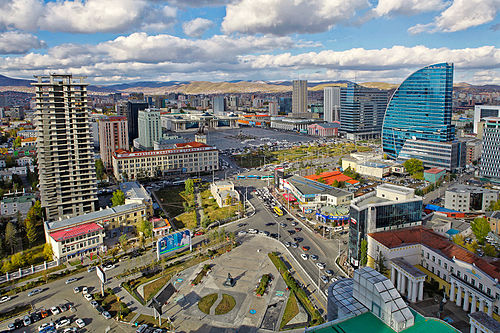
Ulan Bator, the capital city of Mongolia, is located in the north-central part of the country and serves as its political, cultural, and economic center. Founded in 1639 as a nomadic Buddhist village, Ulan Bator has evolved significantly over the centuries and was established as the capital in 1924. The city sits at an elevation of about 1,350 meters (4,430 feet) above sea level and is known for its harsh continental climate, with long, cold winters and warm summers. Home to over a million inhabitants, Ulan Bator is the largest city in Mongolia, accounting for a significant portion of the nation's population.
Ulan Bator features a mix of traditional and modern architecture, with ger districts—where traditional felt tents (gers) are common—coexisting alongside Soviet-era buildings and contemporary high-rises. A notable landmark is the Sukhbaatar Square, which serves as a public space and is surrounded by significant government and cultural institutions, including the Government Palace and the National Museum of Mongolia. The city is also home to several universities, theaters, and cultural centers, reflecting its role as a hub for education and the arts in Mongolia. Despite its rapid urbanization and development challenges, such as air pollution and infrastructure issues, Ulan Bator remains a vibrant city that showcases Mongolian traditions, history, and a growing modern identity. The city's unique juxtaposition of old and new, combined with its breathtaking surrounding landscapes, makes it a fascinating place for both residents and visitors alike.
Facts about Ulan Bator
- Ulan Bator is the capital and largest city of Mongolia, accounting for nearly half of the country's population.
- The city was founded as a religious center in 1639, originally established as a mobile tent city before becoming permanent.
- Ulan Bator is home to the famous Gandan Monastery, one of the most significant Buddhist monasteries in Mongolia, which houses a 26.5-meter tall statue of Migjid Janraisig.
- The city is located at an elevation of about 1,350 meters (4,430 feet) above sea level, making it one of the highest capital cities in the world.
- Ulan Bator serves as the political, cultural, and economic heart of Mongolia, hosting many of the country's major government institutions and cultural sites.
- The annual Naadam Festival, celebrating traditional Mongolian sports like wrestling, horse racing, and archery, takes place in Ulan Bator.
- Ulan Bator has a unique blend of modern and traditional architecture, with Soviet-style buildings standing alongside contemporary designs and traditional ger districts.
- The city experiences extreme temperature variations, with summer highs reaching 30°C (86°F) and winter lows dropping to -40°C (-40°F).
- Ulan Bator is often considered the coldest capital city in the world due to its harsh winters and high altitude.
- The city is undergoing rapid modernization, with new infrastructure projects and developments occurring as Mongolia's economy grows.