Ulan-Ude, Russian Federation
- 360,278 people
- 16 places to visit
- 51.8336, 107.584
Places to Visit (16)
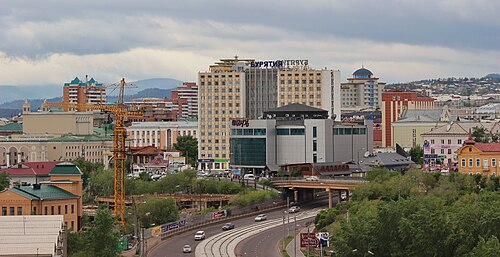
Ulan-Ude is the capital city of the Republic of Buryatia, a federal subject of the Russian Federation. Located in southeastern Siberia, it lies at the confluence of the Uda River and Lake Baikal, the world's deepest freshwater lake, which is just a short distance to the northwest. Founded in the 17th century as a Russian fort, Ulan-Ude grew as a trade center, influenced by both Russian and indigenous Buryat cultures. The city is characterized by its unique blend of Russian and Mongolian traditions, reflected in its architecture, cuisine, and cultural practices. As of the 2021 census, Ulan-Ude has a population of approximately 400,000 residents.
One of Ulan-Ude's notable features is the large statue of Vladimir Lenin, which is the world's largest head of Lenin and serves as a major landmark in the city. The city is also home to several museums and cultural institutions, including the Buryat State Academic Opera and Ballet Theatre, which showcases the rich artistic heritage of the region. Ulan-Ude hosts various cultural festivals, celebrating Buryat history and traditions, including Naadam, which highlights traditional sports and games. The local economy is diverse, based on industries such as manufacturing, food processing, and tourism, with many visitors drawn to the natural beauty of the surrounding areas, particularly Lake Baikal and the vast Siberian landscapes. Ulan-Ude serves as a vital transportation hub, linking Siberia to the Russian Far East and Mongolia, enhancing its strategic importance in the region.
Facts about Ulan-Ude
- Ulan-Ude is known for its unique blend of Russian and Buryat cultures, highlighting the region's ethnic diversity.
- The city is home to the world's largest statue of Vladimir Lenin, which stands at 7.7 meters (25 feet) tall, making it a distinct landmark in Russia.
- Ulan-Ude serves as the capital of the Republic of Buryatia and is an important center for Buddhist culture in Russia, featuring several temples and monasteries.
- The Trans-Siberian Railway passes through Ulan-Ude, making it a significant transportation hub along one of the world's most famous railways.
- The Baikal Lake, the world's deepest and oldest freshwater lake, is located just a short distance from Ulan-Ude, attracting nature enthusiasts and tourists.
- Ulan-Ude hosts the annual 'World Buryat Day' festival, celebrating Buryat culture, music, and traditions, which sets it apart from many other cities in Russia.
- The city features a historical train station built in the early 20th century that reflects its colonial architecture and historical significance.
- Ulan-Ude is considered a center for the study of Buddhism in Russia, with institutions dedicated to Tibetan and Buryat Buddhist teachings.
- The city has a rich tradition of folklore and is known for its unique musical style, incorporating traditional Buryat instruments and sounds.
- Ulan-Ude's economy is heavily influenced by its location, with industries including transportation, manufacturing, and tourism being essential to its development.