Valenciennes, France
- 44,821 people
- 15 places to visit
- 50.3571, 3.5183
Places to Visit (15)
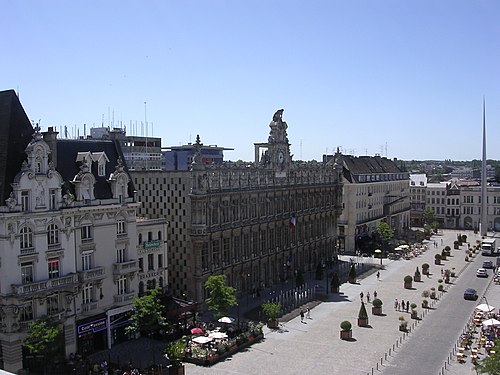
Valenciennes is a city located in the northern part of France, within the Hauts-de-France region. It serves as the prefecture of the Valenciennes department and is known for its rich history, cultural heritage, and industrial significance. The city lies near the Belgian border and is approximately 70 kilometers southeast of Lille, the largest city in the region. Valenciennes has a population of around 43,000 residents, making it a small yet vibrant urban center.
Historically, Valenciennes dates back to ancient times, with its roots believed to extend as far as Roman settlement. The city flourished during the Middle Ages and became an important center for weaving, particularly in the production of tapestries. During the 18th and 19th centuries, Valenciennes underwent significant industrial development, particularly in coal mining and textile manufacturing, which contributed to its economic growth and urban expansion. European conflicts, including World War I and II, had profound impacts on the city, resulting in extensive damage and subsequent reconstruction initiatives that shaped its modern appearance.
Today, Valenciennes boasts a blend of historical architecture and contemporary developments. Visitors can explore landmarks such as the Saint-Cordon Basilica, a notable example of Baroque architecture, and the Palais des Beaux-Arts, which houses an impressive collection of art. The city's cultural scene is vibrant, with various festivals and events celebrating local traditions, music, and arts. Economically, Valenciennes has transitioned to a more diversified economy, with sectors like technology, innovation, and services playing prominent roles. The city is also well connected through rail and road networks, facilitating easy access to larger urban centers and contributing to its ongoing development as a hub in the region.
Facts about Valenciennes
- Valenciennes is known for its rich history in the textile industry, particularly lace-making, which dates back to the 16th century.
- The city is home to the unusual 18th-century 'Grand Vieux Château', a former fortress and a significant example of military architecture in France.
- Valenciennes was heavily impacted during World War I and II, leading to extensive rebuilding and modernization in the post-war era.
- Each year, Valenciennes hosts the 'Festival International du Film de Valenciennes', celebrating international cinema and attracting filmmakers and audiences alike.
- The city's distinctive Gothic-style church, 'Basilique Notre-Dame-du-Saint-Cordon', is famous for its stunning stained-glass windows and impressive architecture.
- Valenciennes is one of the towns that championed the French painting movement of Impressionism, notable in the works of native artists like Henri Martin.
- The 'Place d'Armes' in Valenciennes is unique as it features a blend of architectural styles, reflecting the city’s diverse historical influences.
- Valenciennes produced notable figures, including the painter Jean-Baptiste Greuze, an important figure in French art during the 18th century.
- The city is strategically located near the Belgium border, making it a critical historical hub for trade and military routes in Europe.
- Valenciennes has a vibrant local culinary scene, a highlight being 'la tarte au maroilles', a cheese tart that showcases the region's rich gastronomic traditions.